blog | inmotion training studio
How Much Protein Do You Really Need?
How Much Protein Do You Really Need?
(Especially After 40)
I get asked this constantly.
“How much protein should I be eating?”
“How much is actually in this?”
“Is this enough?”
And most of the time… people are guessing.
Here’s what I see in real life:
Men naturally tend to eat more protein without thinking about it. Bigger portions, more meat, more overall calories.
Women? We tend to lean toward carbs, lighter meals, snacky foods, yogurt bowls that are mostly granola, salads that look healthy but only have 12 grams of protein.
This isn’t about cutting carbs.
It’s about awareness.
If you start consciously asking yourself,
“How much protein is actually in this meal?”
everything shifts.
Why Protein Matters More As You Get Older
Protein isn’t just a “fitness” thing.
It’s a longevity thing.
As we age, we naturally lose muscle — a process called sarcopenia.
That muscle loss impacts:
Metabolism
Balance
Strength
Bone density
Joint protection
Insulin sensitivity
Independence
Muscle is metabolically active tissue.
Less muscle = slower metabolism.
Less muscle = higher fall risk.
Less muscle = harder time maintaining body composition.
And here’s the important part:
As we get older, our bodies don’t use protein as efficiently.
Which means…
You actually need more, not less.
Strength training builds muscle.
Protein gives your body the raw materials to maintain it.
If you’re lifting but under-eating protein, you’re limiting your results.
How Much Protein Do You Need?
Let’s simplify this into grams per pound (because kilograms confuse everyone).
Active Adults (Men & Women)
(Strength training, walking, classes, sports, consistent movement)
0.6 – 1.0 grams per pound of bodyweight per day
Example:
150 lb woman → 90–150g
180 lb man → 108–180g
Most people feel great somewhere in the middle.
Less Active Adults (18–64)
0.5 – 0.7 grams per pound
Example:
150 lb woman → 75–105g
180 lb man → 90–126g
Adults 65+
Protein needs increase slightly due to reduced absorption and muscle preservation needs.
0.6 – 0.9 grams per pound
If active, lean toward the higher end.
Example:
150 lb woman (65+) → 90–135g
180 lb man (65+) → 108–162g
Adults 70+
Muscle maintenance becomes critical for fall prevention and independence.
0.7 – 0.9 grams per pound, depending on health and activity.
This is where protein becomes protective medicine.
The Reality I See in Clients
Most women think they’re eating enough.
Then we track for 3–5 days.
They’re at 45–60g per day.
They thought they were at 100g.
That gap is just awareness.
Men usually undershoot less — but even they often fall short if they’re trying to lean out.
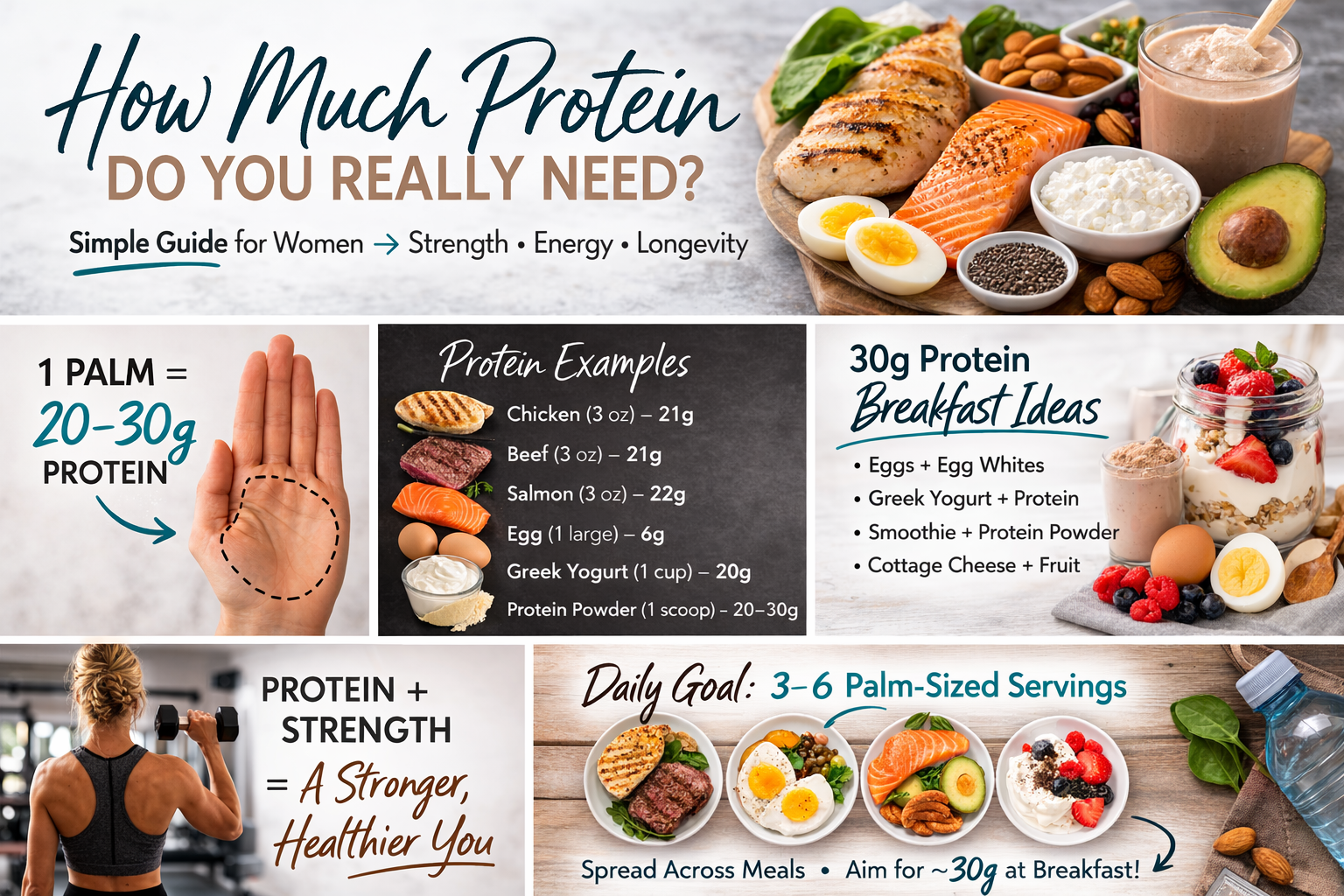
Keep It Simple: The Palm Method
One palm-sized portion (size and thickness of your palm):
≈ 20–30 grams protein
Most adults need:
3–6 palm-sized servings per day
Usually:
1–2 per meal
No scale required.
Step One: Just Track for 3–5 Days
Before changing anything:
Write your protein intake on a Post-it note for a few days.
Many women think they’re eating 100g.
They’re actually eating 50–60g.
Awareness first.
Adjustment second.
If You're Only Eating 50g…
Do NOT jump to 120g tomorrow.
You’ll feel overly full.
Your digestion may struggle.
It won’t stick.
Instead:
Increase by 3–5 grams per day.
Small increases allow your gut and appetite to adjust.
Consistency wins.
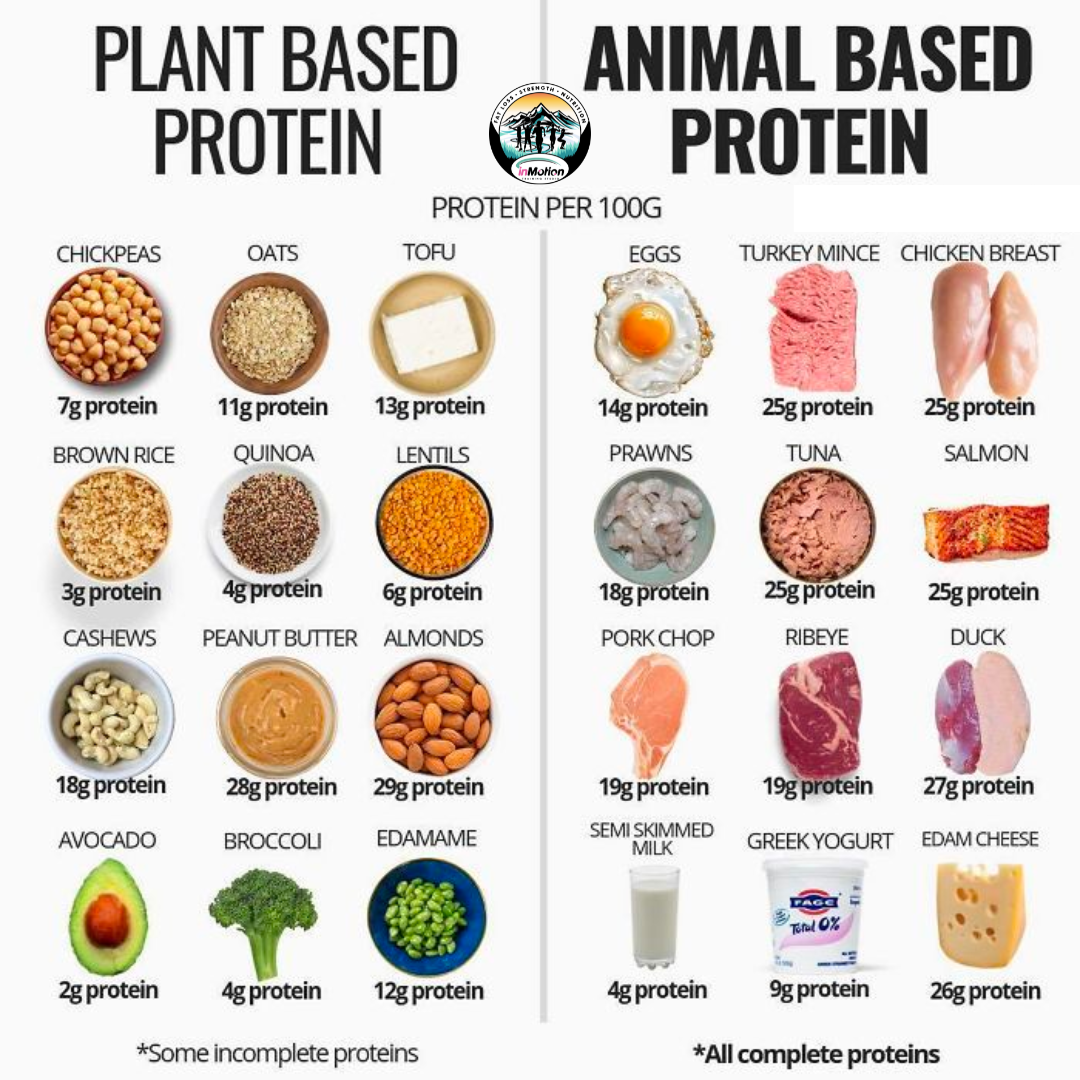
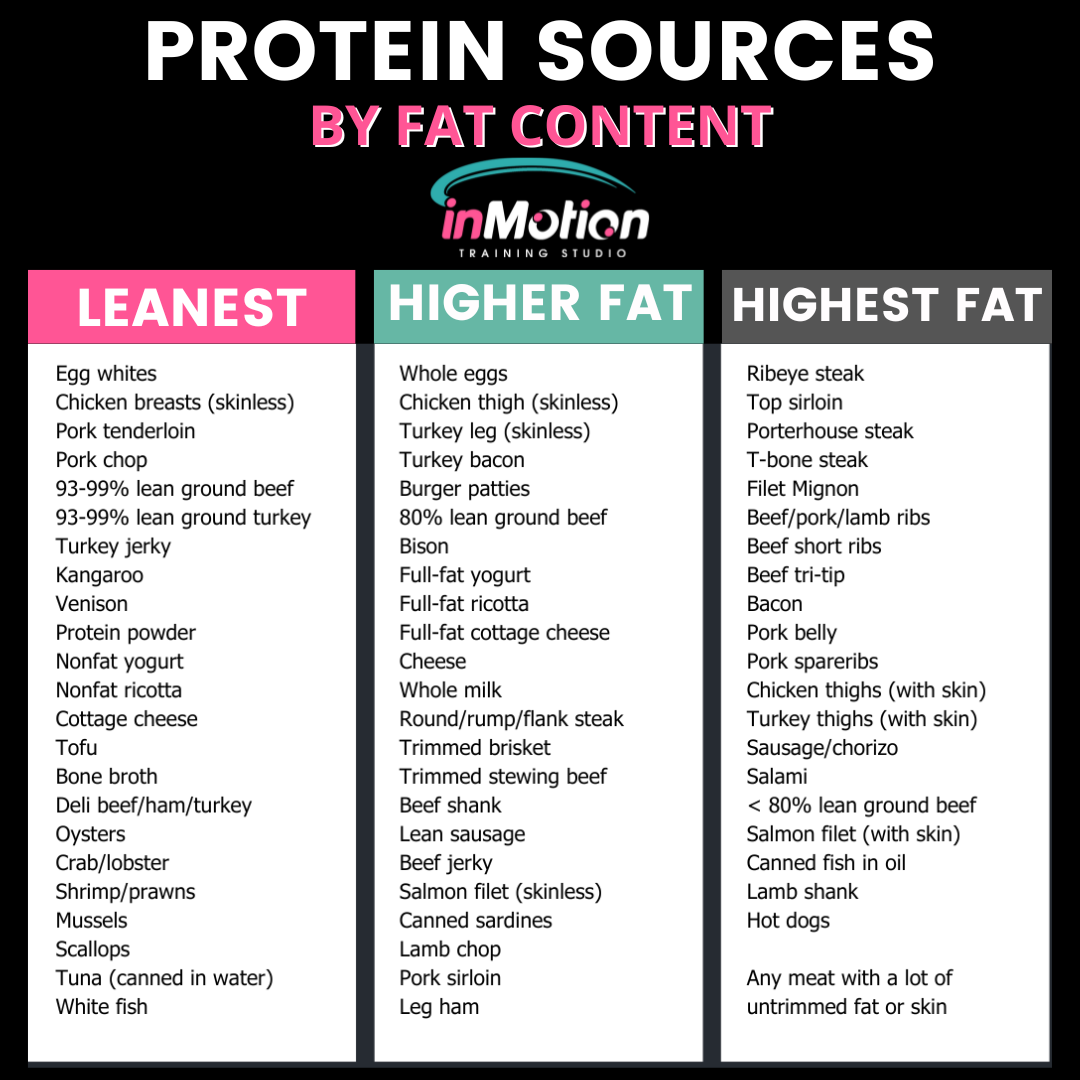
How Much Protein Is Actually In Food?
Here are practical examples:
Animal-Based Proteins
3 oz chicken breast → ~21g
4 oz chicken breast → ~28g
3 oz lean beef → ~21g
4 oz lean beef → ~28g
3 oz salmon → ~22g
1 large egg → 6g
½ cup egg whites → 13g
1 cup Greek yogurt (plain) → 18–22g
1 cup cottage cheese → 24–28g
1 scoop whey protein → 20–30g
Plant-Based Proteins
1 cup cooked lentils → 18g
1 cup black beans → 15g
½ cup tofu → 10g
3 oz tempeh → 15–18g
3 tbsp hemp seeds → 10g
2 tbsp chia seeds → 4–5g
1 cup cooked quinoa → 8g
Vegetables contain small amounts (2–5g per cup typically), but they are not primary protein sources.
What 100g of Protein Might Look Like in a Day
Example:
Breakfast:
Greek yogurt + protein powder → 30g
Lunch:
4 oz chicken + salad → 28g
Snack:
Cottage cheese → 20g
Dinner:
4 oz salmon → 25g
Total: ~103g
No extreme dieting required.
If You’re Only Eating 50g Right Now
Do NOT jump to 130g tomorrow.
You’ll feel overly full.
Your digestion may push back.
It won’t be sustainable.
Instead:
Increase by 3–5 grams per day.
Let your gut adjust.
Let appetite adjust.
Slow and steady.
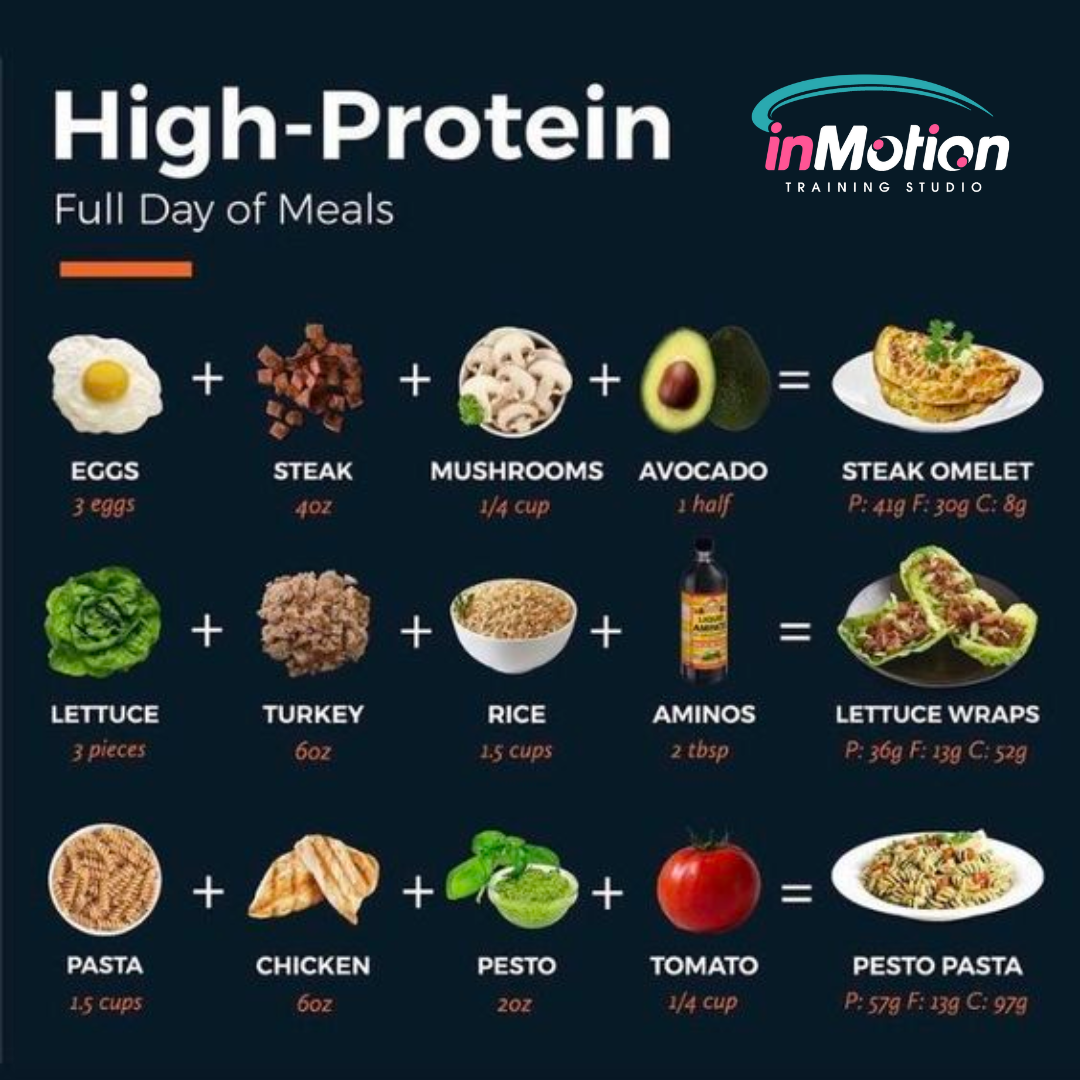
Why 30g at Breakfast Is Powerful
If your goal is:
Better energy
Fewer cravings
Stable blood sugar
Lean muscle support
Improved metabolism
Then breakfast protein matters.
Aim for ~30g at breakfast.
This stimulates muscle protein synthesis and activates satiety hormones like GLP-1.
It also prevents the mid-morning crash.
Easy 30g Breakfast Examples
3 eggs + ½ cup egg whites
Greek yogurt + ½ scoop protein
Protein smoothie (1 scoop protein + Greek yogurt)
Cottage cheese + eggs
4 oz ground turkey + 1 egg
Smoked salmon + 2 eggs + egg whites
Prep helps:
Egg muffins
Overnight oats with protein
Prepped smoothie cups
Cooked ground turkey for breakfast bowls
What About Protein Powder?
I use it. Many of my clients use it.
But here’s the truth:
Not all protein powders are created equal.
Some are full of:
Artificial sweeteners
Fillers
Cheap blends
Added sugars
And many cause:
Bloating
Gas
Digestive issues
Especially if you go from low protein to a full 30g scoop overnight.
If you’re new to it:
Start with ½ scoop.
Increase gradually.
Look for:
Minimal ingredients
No added sugar
Third-party testing
You can check:
I personally like Momentous for quality and testing standards plus taste- it's not too sweet and doesnt give me a stomach ache.
But remember — it’s a supplement.
Food first. Powder fills the gap.
Start Small
If new to protein powder:
Start with ½ scoop.
Increase slowly over 1–2 weeks.
Let digestion adjust.
Look For:
Minimal ingredients
No added sugar
Transparent sourcing
Third-party testing
Independent testing sites:
These verify quality and purity.
Types of Protein
Animal-Based:
Whey
Casein
Egg white
Beef isolate
Plant-Based:
Pea
Rice
Hemp
Pumpkin seed
Vegan blends
If dairy bothers you, try egg white, beef isolate, or a clean plant blend.
I personally like for quality and testing standards.
But protein powder is a supplement.
Food first. Powder fills the gap.
Signs You May Need More Protein
Night cravings
Hunger shortly after meals
Energy crashes
Slow workout recovery
Difficulty building strength
Trouble changing body composition
Often the issue isn’t more cardio.
It’s more protein.
Final Takeaway
You do not need perfection.
You need:
3–5 days of awareness
Protein at each meal
3–6 palm servings daily
~30g at breakfast
Slow increases if intake is low
Start with one change.
Add one protein source.
Let consistency compound.
Because protein isn’t about chasing a number.
It’s about staying strong, steady, metabolically healthy, and independent for decades.
And that’s the real goal. 💪
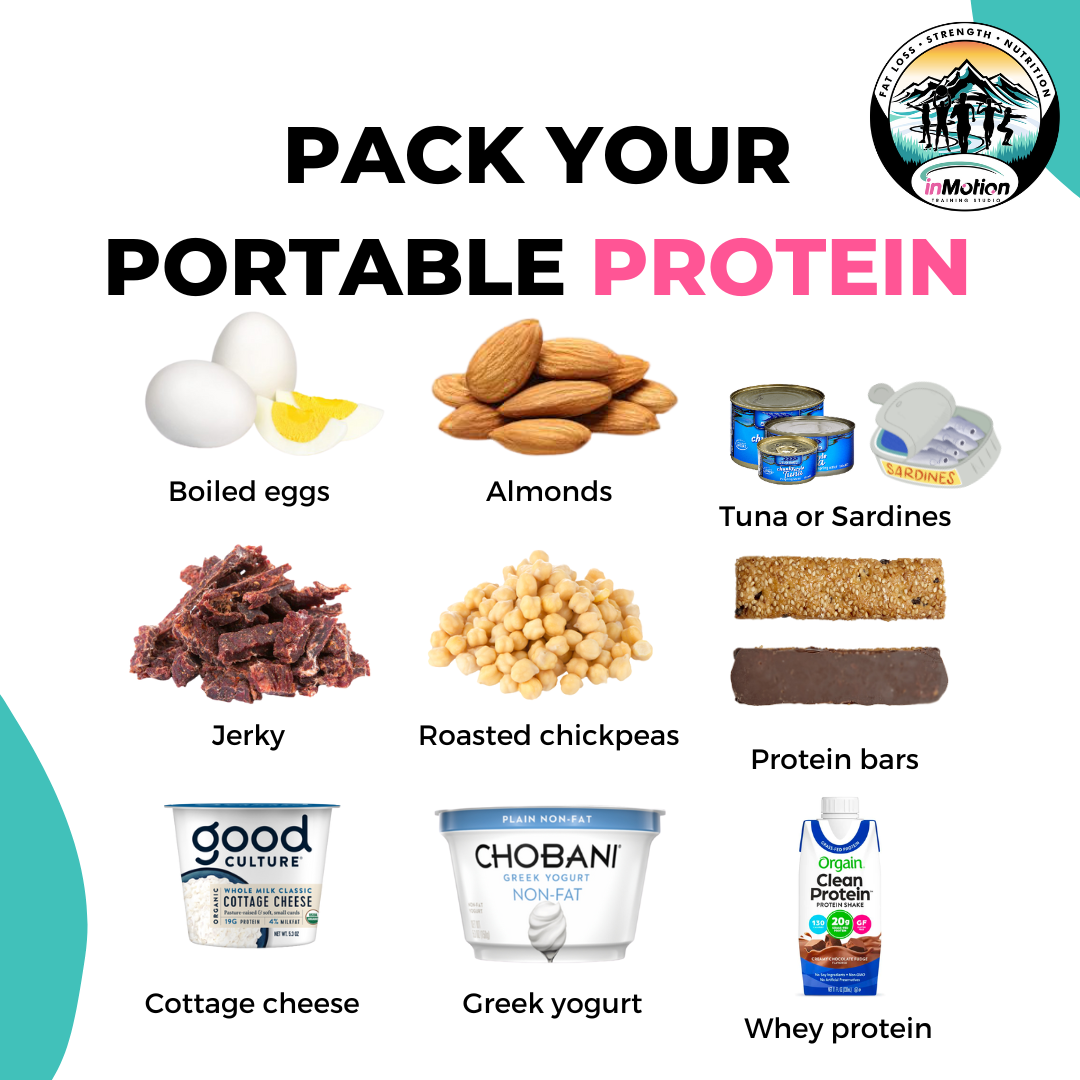
Not Sure Where You’re At? Let’s Look At It Together.
Here’s the truth.
Most people don’t need more willpower.
They need clarity.
When someone comes to me asking about protein, fat loss, GLP-1s, metabolism, or strength… the first thing I look at isn’t a supplement.
It’s their foundation.
Because in reality:
Many women are under-eating protein
Many are unintentionally under-fueling
Some are overdoing fats and missing protein targets
Blood sugar is often unstable
Hydration and minerals are low
Meals are carb-heavy without enough structure
And adding a GLP-1, peptide, or fat-loss plan on top of that without fixing the foundation?
That’s backwards.
This is exactly why I created the Nutrition Audit.

What the Nutrition Audit Does
We don’t guess.
We look at:
Your actual intake (protein, fiber, fats, carbs)
Meal timing
Blood sugar patterns
Hydration + electrolytes
Recovery
Training support
Hidden gaps
Then I give you:
Clear feedback
Simple adjustments
A protein target that makes sense for YOU
Meal examples based on your lifestyle
A realistic action plan
Not generic advice.
Personalized strategy.
Why This Matters
Protein is powerful.
But protein without structure?
Without enough fiber?
Without enough minerals?
Without enough total calories?
It doesn’t work the way it should.
When we dial in your foundation first:
Energy improves
Cravings decrease
Strength improves
Body composition shifts
Metabolism stabilizes
And THEN everything else works better.
If You’ve Been Wondering…
“Am I eating enough protein?”
“Why am I still hungry?”
“Why isn’t my body responding?”
“How much do I personally need?”
This is where we start.
You don’t need to overhaul your life.
You need clear direction.
Ready?
If you want help figuring out exactly where you are — and what to adjust — apply for a Nutrition Audit.
We’ll look at the data.
We’ll simplify it.
We’ll build a plan that actually fits your real life.
Because guessing isn’t a strategy.
Clarity is.
And that’s where real progress starts. 💪

In motion training studio - bend
social media


REQUEST MORE INFORMATION
change you can do & results you will see


LOCATION
inMotion Training Studio
1279 NE 2nd St, Bend, Oregon 97701