blog | inmotion training studio
The Silent Reason You're Cells are Aging Faster Than Time
Health & Longevity
Inflammaging: Why Chronic Inflammation Is Aging You Faster Than Time
The silent fire running in the background of your biology — and exactly what to do about it.
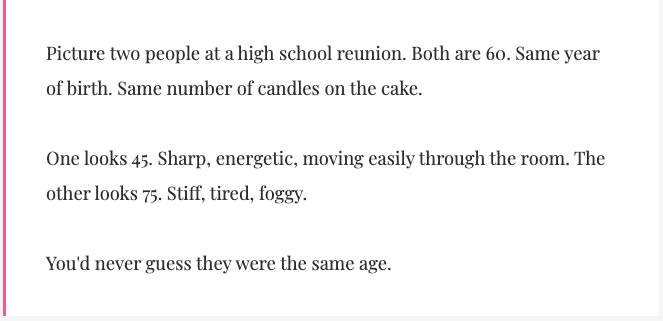
The difference isn't genetics. It isn't luck. And it isn't how many birthdays they've had.
It's how their cells handled those years. And that comes down to one thing more than almost anything else:inflammation.
Not the kind you can see. Not a swollen ankle or a red cut. The other kind. The quiet kind that never fully switches off. The kind that hums in the background of your biology for years, doing damage you won't notice until it becomes impossible to ignore.
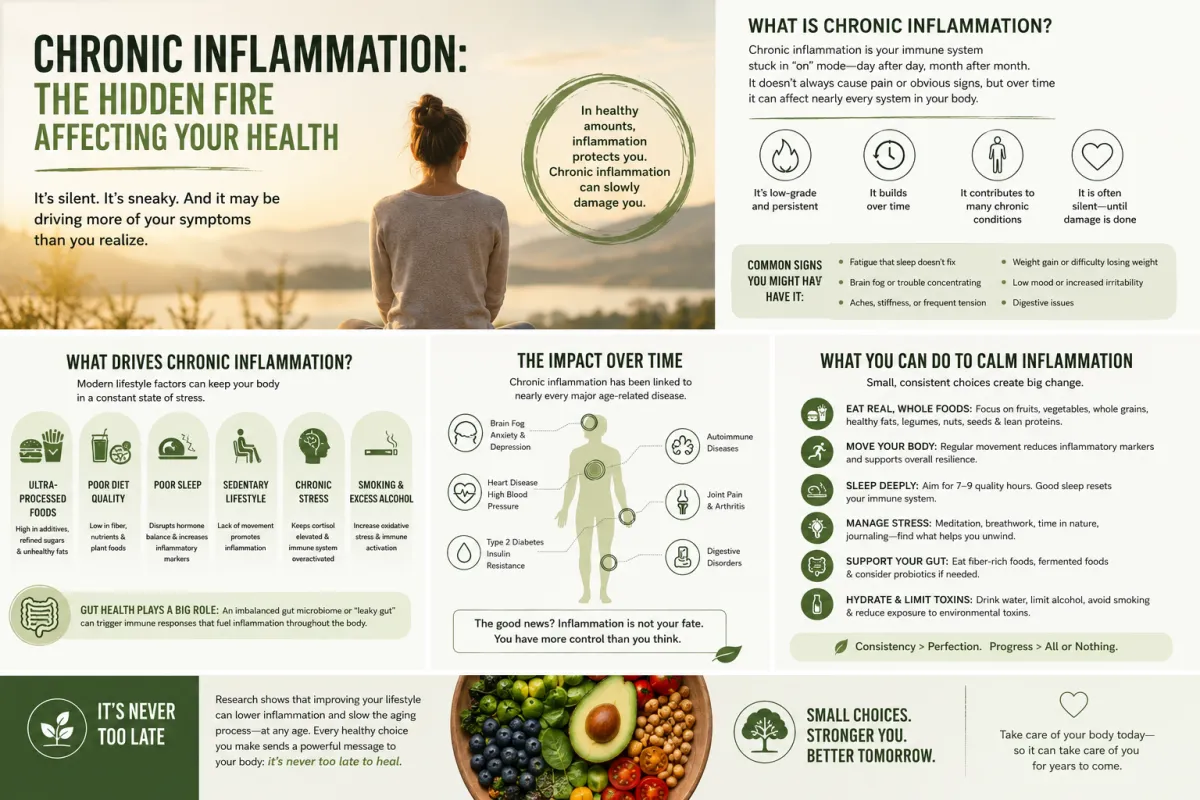
The fatigue that sleep doesn't fix. The brain fog that rolls in by mid-morning. The joint stiffness when you get out of bed. The weight that won't budge. The mood that just feels flat.
Most people chalk this up to getting older. Most doctors do too.
But these aren't symptoms of aging. They're symptoms of inflammation. And the rate at which your body ages is not fixed — it is being actively shaped, right now, by the level of chronic inflammation running through your system.
Scientists call it inflammaging. And understanding it might be the most important thing you do for your health this year.
What Is Inflammaging?
The term is exactly what it sounds like: inflammation + aging.
Chronic, low-grade inflammation slowly accelerating the aging of your cells, tissues, and body as a whole.
Inflammation drives aging. Aging drives inflammation. The cycle feeds itself.
And most of the time, it’s completely silent.
The early signs — fatigue, stiffness, brain fog, stubborn weight gain, poor recovery, skin losing its vitality — are often brushed off as “just getting older.”
But underneath the surface, that quiet fire is doing real damage.
DNA accumulates harm it can’t fully repair. Tissues begin breaking down faster than they rebuild. Mitochondria become damaged and produce less energy. Over time, the conditions we associate with aging — heart disease, type 2 diabetes, Alzheimer’s, osteoporosis, metabolic dysfunction — begin taking root.
Not simply because of age.
Because of the inflammation carried through those years.
There’s an important shift in perspective here.
For decades, medicine focused heavily on cholesterol as the villain in heart disease. But cholesterol itself isn’t inherently bad. Your body makes it intentionally — it’s essential for hormones, cell membranes, vitamin D production, and brain function.
The problem is what happens when cholesterol meets chronic inflammation.
Inflammation can oxidize cholesterol particles, damaging blood vessels and contributing to plaque formation inside arteries. In other words, inflammation creates the environment where damage occurs.
Research continues to show that inflammatory markers often tell us more about long-term disease risk than cholesterol numbers alone.
We’ve spent years targeting the smoke while ignoring the fire.
That’s the essence of inflammaging.
The encouraging part?
Inflammation is highly influenced by lifestyle.
Sleep. Stress. Movement. Nutrition. Blood sugar balance. Gut health. Environmental toxins. Muscle mass. Recovery. Social connection. Even light exposure.
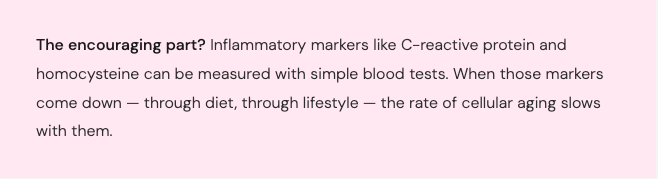
And many inflammatory markers — like C-reactive protein (CRP) and homocysteine — can be measured with simple blood tests.
When inflammation comes down, energy improves. Recovery improves. Brain function improves. And the rate of cellular aging can begin slowing down too.
You are not powerless against the aging process.
Your daily habits are either adding fuel to the fire… or helping put it out.
The Quiet Fire
The term is exactly what it sounds like: inflammation + aging. Chronic, low-grade inflammation accelerating the aging of your cells, your tissues, and your body as a whole.
Inflammation drives aging. Aging drives inflammation. The loop feeds itself — silently, continuously, for years.
The early signals — fatigue, stiffness, brain fog, skin losing its vitality — get waved away as normal. But over time, that quiet fire does real damage. DNA accumulates harm it can't repair. Tissues break down faster than they're rebuilt. And the diseases we associate with old age — heart disease, type 2 diabetes, Alzheimer's, osteoporosis — don't take root because of time. They take root because of the inflammation those years carried with them.
"We've been targeting the victim instead of the cause. Cholesterol isn't the villain — inflammation is what makes it dangerous."
There's a useful reframe here. For decades, medicine has focused on cholesterol as the villain in heart disease. But cholesterol itself isn't the problem — your body makes it deliberately. It's essential for hormones, cell membranes, and brain function.
The problem is what happens to cholesterol when it meets chronic inflammation. Inflammation oxidises it. And it's the oxidised cholesterol that damages arteries and forms plaque. When inflammation is low, cholesterol levels matter far less. When inflammation is high, even "normal" cholesterol becomes dangerous.
The Evidence
Inflammaging Is Not Inevitable
If inflammaging were simply the price of being human, you'd expect to see it everywhere. In every population. In every culture.
You don't.
The Tsimane people of the Bolivian Amazon live in a tropical environment full of infections, parasites, and pathogens. Their immune systems are working hard, all the time. But their inflammation doesn't increase with age the way it does in Western populations. And the diseases we assume are inevitable — heart disease, diabetes, dementia — barely exist among them.
A neighbouring group — the Moseten, culturally similar but slightly more urbanised — already shows early signs of inflammaging. Not because they're genetically different. Because their environment has shifted.
The implication is striking.Inflammaging isn't a universal feature of human biology. It's a feature of modern Western life.Which means it's not something that happens to you. It's something being done to you — by diet, by environment, by the way we live.
The Drivers
What's Doing It to You
Understanding what fuels inflammaging is the first step toward stopping it. Here are the primary modern culprits.
1 Ultra-Processed Food
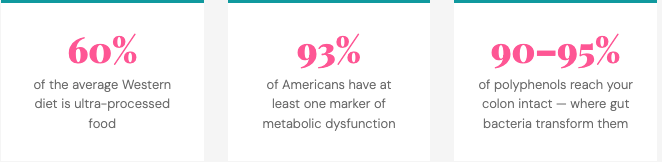
Calorically dense but nutritionally empty — these foods starve your body of the compounds it needs to keep inflammation in check. Many contain emulsifiers that strip the gut's protective mucus layer, disrupt the microbiome, and allow bacterial fragments into the bloodstream that trigger chronic immune activation. They make up roughly 60% of the average Western diet.
2 Red & Processed Meat
Promotes gut bacteria that produce TMAO — an inflammatory compound that damages blood vessel linings. Also raises IGF-1, a growth factor linked to accelerated aging and cancer risk.
3 Chronic Stress & Poor Sleep
Your nervous system controls your inflammatory set point. Weeks and months of inadequate sleep quietly raise inflammatory markers and never give the body the restoration window it needs. Chronic stress keeps you in sympathetic dominance — flooding your system with cortisol and inflammatory signals.
4 Environmental Toxins
Microplastics have been found in human brain tissue at concentrations rising ~50% in just eight years. Organophosphate pesticides, PFAS chemicals, heavy metals, endocrine disruptors — chronic, daily sources of inflammatory activation the immune system was never designed to handle.
5 A Sedentary Lifestyle
Lack of movement reduces short-chain fatty acid production, increases inflammation, and accelerates muscle loss. Muscle is metabolically protective — when it declines, inflammation rises.
6 Gut Dysbiosis
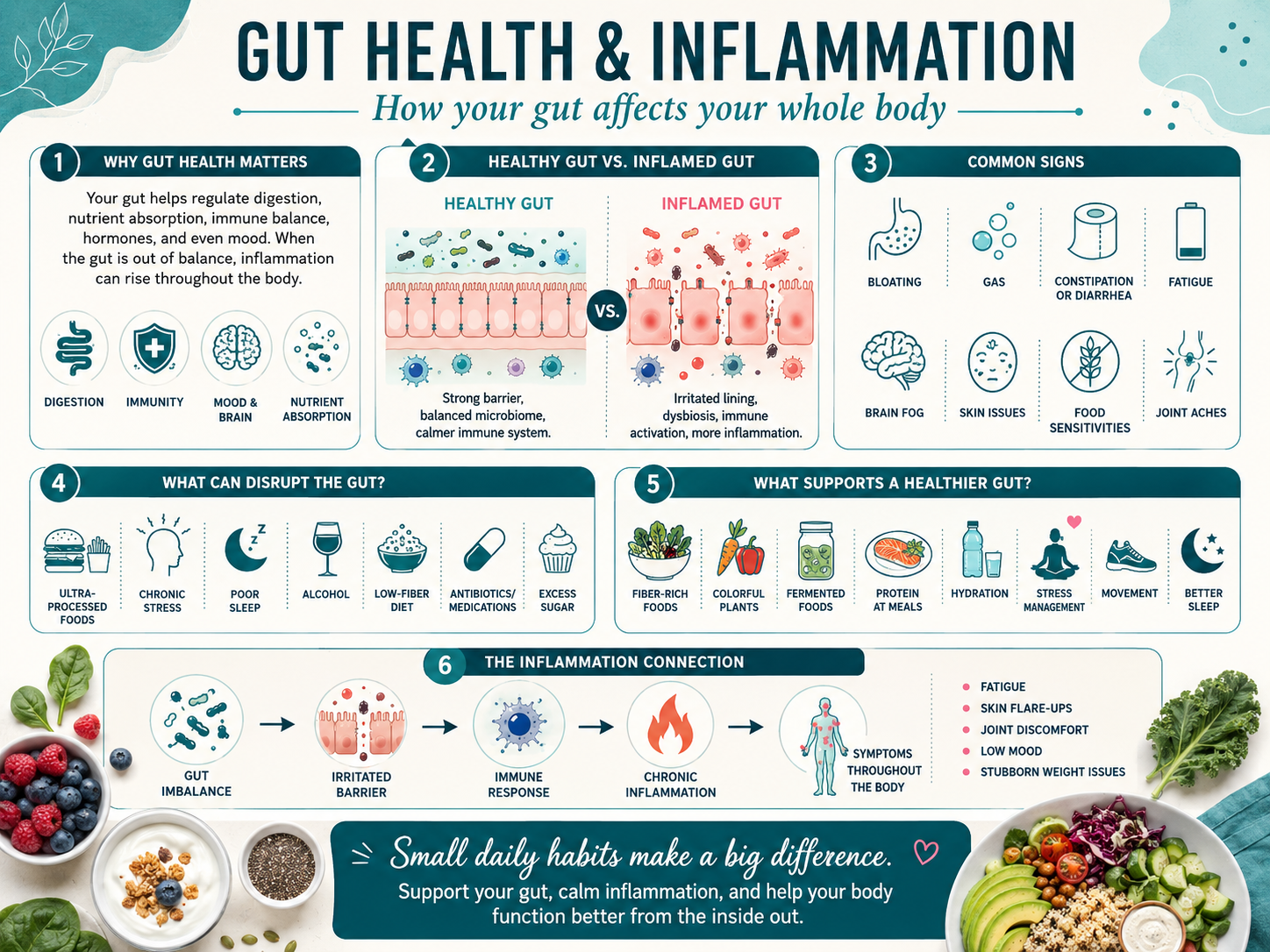
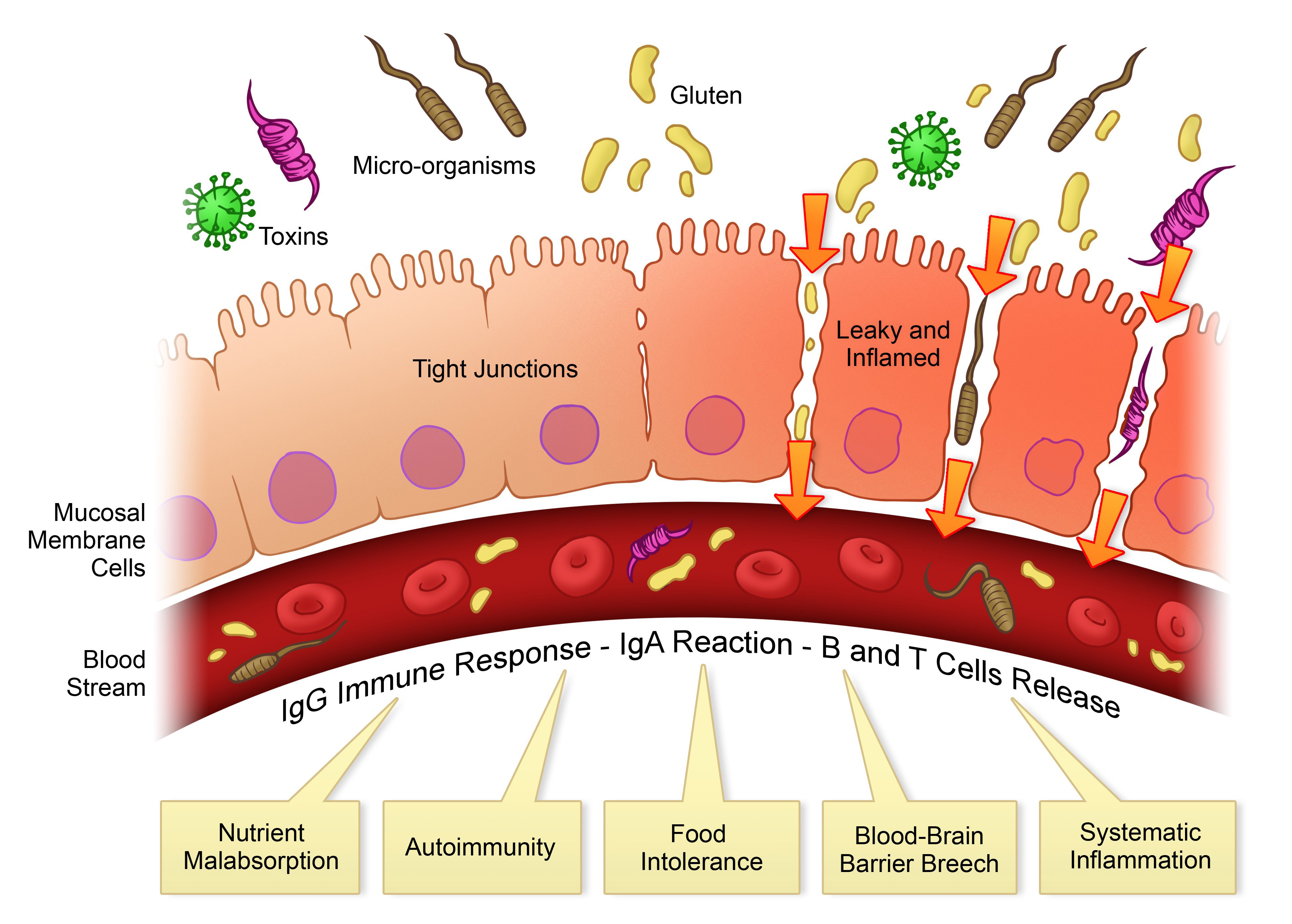
A disrupted microbiome — too few beneficial species, too many harmful ones — creates a state of chronic immune activation. Your body is essentially fighting an infection that isn't there. And it never stops. This is the thread that ties most of the other culprits together.
The Cellular Level
The Mitochondrial Connection
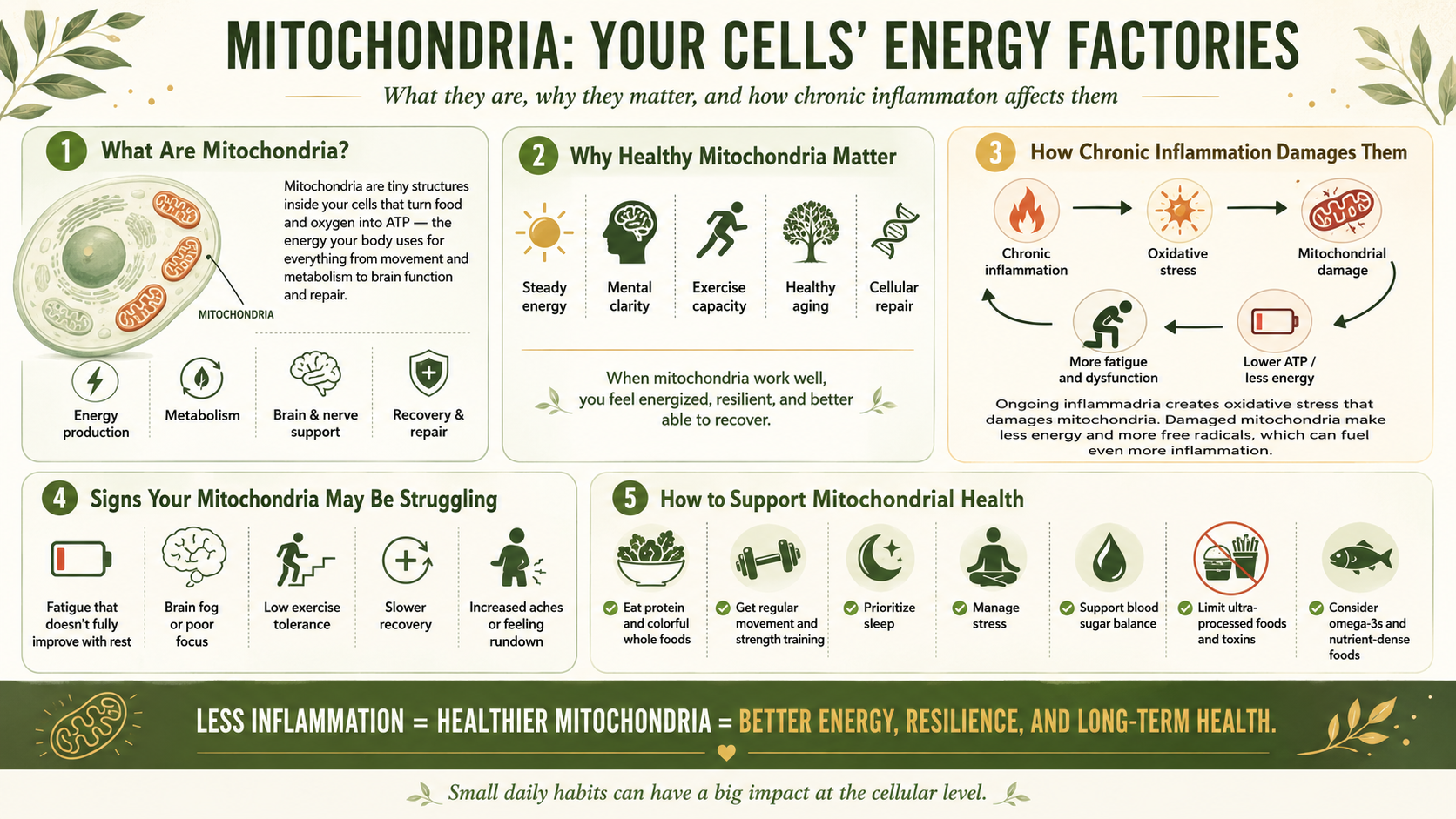
If inflammaging has a ground zero at the cellular level, it's your mitochondria — the tiny power generators inside virtually every cell. They convert food into ATP, the energy your cells need to function. Every thought, every heartbeat, every act of cellular repair depends on them.
Here's the vicious cycle:chronic inflammation damages mitochondria— so they produce less energy. But damaged mitochondria also leak free radicals, which trigger more inflammation, which damages more mitochondria. The cycle accelerates. This is the engine driving fatigue, cognitive decline, heart disease, and frailty at the cellular level.
The good news? Your body has a built-in repair system. It can break down old, damaged mitochondria (a process called mitophagy) and build fresh new ones (mitochondrial biogenesis). Both can be activated — by the right foods, the right lifestyle signals, and perhaps most remarkably, by your gut bacteria.
The Missing Piece
The Gut Connection You Haven't Heard About
Here's the part of the inflammaging story that surprises most people.
Polyphenols — the compounds that give plant foods their colour — have been linked to slower aging in study after study. But your body barely absorbs them. About 90–95% arrive in your colon intact.
So how do they help?Your gut bacteria eat them.And what those bacteria produce in return are compounds that trigger your body's built-in mitochondrial repair system.
The most studied is urolithin A — produced by gut bacteria from compounds in pomegranates, walnuts, raspberries, and pecans. It triggers mitophagy: clearing out the damaged mitochondria so new ones can be built. EGCG from green tea does something similar. So do resveratrol and quercetin.
The connection is elegant. Eat colourful plant foods → feed specific gut bacteria → they produce compounds that rejuvenate your cellular batteries → you age more slowly.
But not everyone's microbiome can do this efficiently. People who age well tend to have polyphenol-rich diets and gut ecosystems resembling those of younger, healthier people. People who age prematurely tend to have pro-inflammatory ecosystems low in plant diversity.
"Your gut microbiome isn't just digesting your food. It's determining how fast you age."
Starting Now
What You Can Actually Do
The full picture of how to reverse inflammaging is deep. But you don't have to understand all of it to start. These are the foundations.
Feed your gut bacteria.Nourish your microbiome with diverse fibre sources — oats, legumes, garlic, onions, leeks, asparagus, cooled cooked potatoes, green bananas. Fermented foods like sauerkraut, kimchi, and kefir introduce live bacteria directly.
Eat the colour.Berries, green tea, dark chocolate (85%+), pomegranate, walnuts, olive oil, cruciferous vegetables. These are the polyphenol-rich foods that produce the mitochondrial repair compounds your cells depend on. Variety matters — different polyphenols feed different bacteria.
Prioritise omega-3s.Ground flaxseed, chia seeds, walnuts, and algae oil all provide the omega-3 fatty acids that directly suppress pro-inflammatory signalling.
Cut back on ultra-processed foods.Especially those containing emulsifiers and artificial sweeteners. Read labels. Cook from scratch when you can.
Move your body.Even walking reduces inflammatory markers. Consistency matters far more than intensity.
Protect your sleep and manage your stress.These aren't luxuries. They're anti-inflammatory interventions. Deep breathing, time in nature, consistent sleep — they all shift your inflammatory set point in the right direction.
Reduce toxin exposure where you can.Filter your water. Choose organic for the most heavily sprayed produce. Reduce plastic food storage. Small shifts compound.
Test your markers.Ask your doctor for hs-CRP, homocysteine, vitamin D, and an omega-3 index. These give you an objective picture of where your inflammation stands — and a baseline to improve from.
It's Not Too Late
The Body Has an Extraordinary Capacity to Heal
People in their 70s and 80s who make changes for the first time see measurable improvements in energy, sleep, stamina, and quality of life. Your mitochondria can be rebuilt. Your gut bacteria can be restored. Your inflammatory markers can come down.
Aging is inevitable. Inflammaging is not.
Every polyphenol-rich meal. Every night of good sleep. Every walk. Every day without ultra-processed food. It compounds — quietly, steadily, over time.
You don't have to overhaul everything at once. You don't have to be perfect. You just have to start.


In motion training studio - bend
social media


REQUEST MORE INFORMATION
change you can do & results you will see


LOCATION
inMotion Training Studio
1279 NE 2nd St, Bend, Oregon 97701