
blog | inmotion training studio
NEAT: The “Hidden” Fat Loss Tool Most People Ignore
NEAT: The “Hidden” Fat Loss Tool Most People Ignore
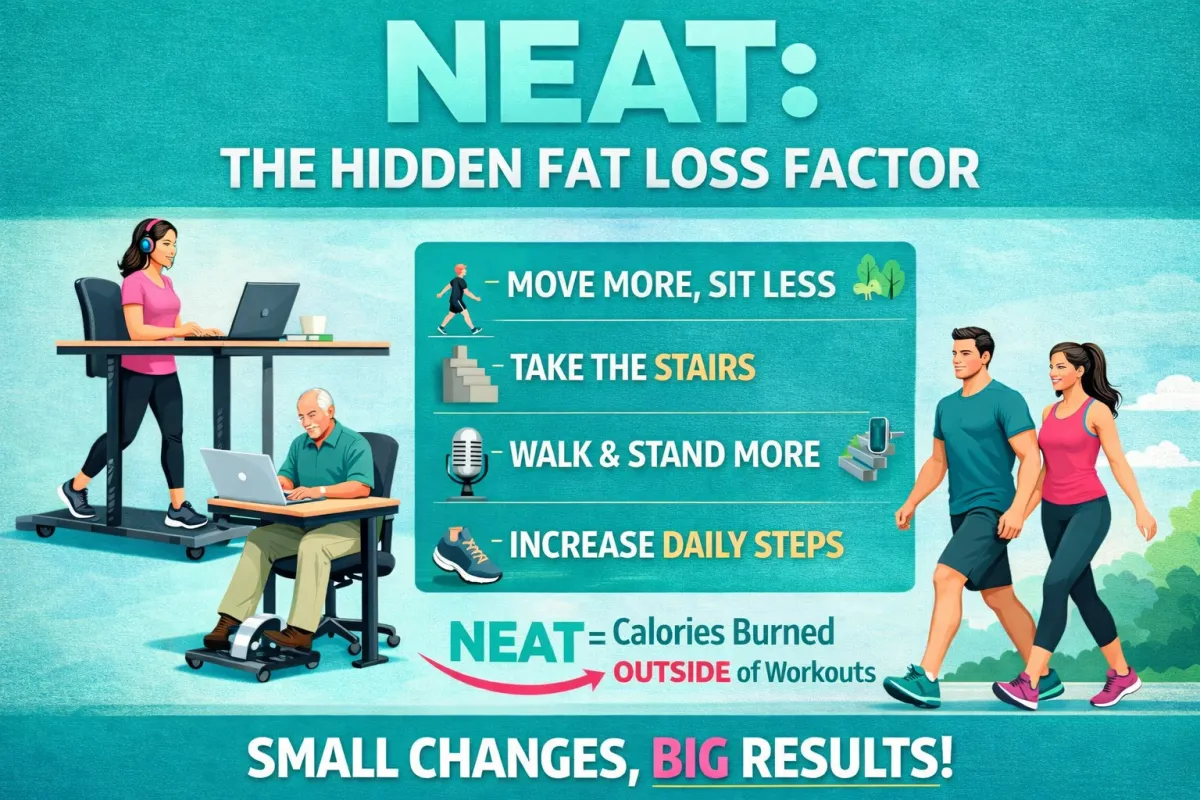
Ever seen someone on one of those under-desk treadmills…
or pedaling a mini bike during a Zoom call…
or walking during a podcast and thought:
“Okay… that’s a little weird.” 😅
Well… they’re not weird.
They’re just getting their NEAT in.
What is NEAT?
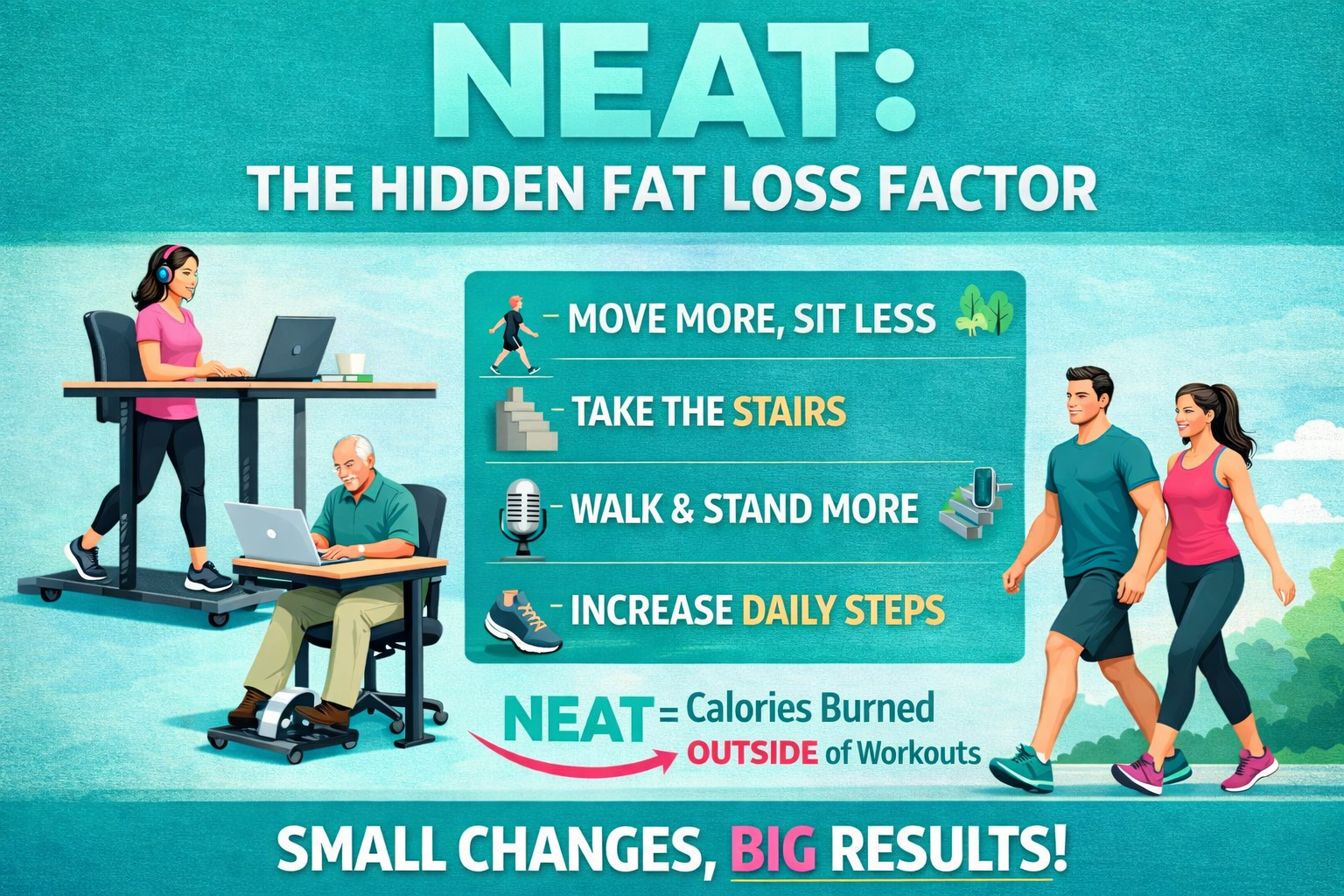
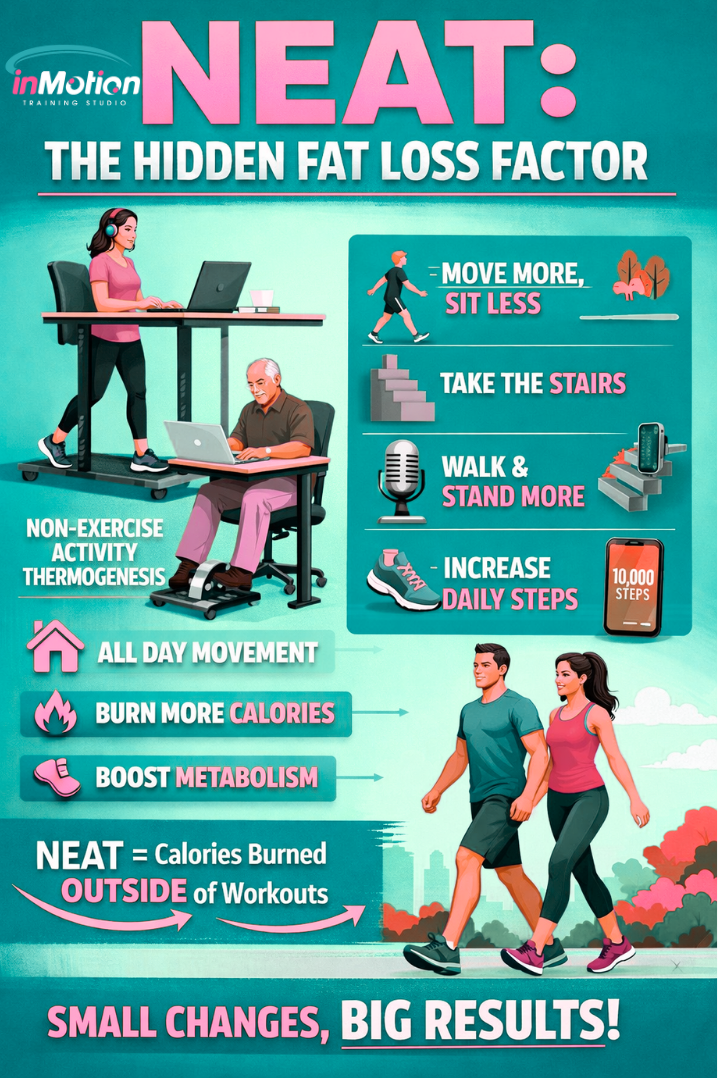
NEAT = Non-Exercise Activity Thermogenesis
It’s a fancy way of saying:
👉 All the calories you burn outside of intentional workouts.
That includes:
Walking around your house
Taking the stairs
Cleaning, cooking, yard work
Fidgeting, pacing, standing
Playing with your kids or dogs
Basically… all the movement that isn’t a “workout.”
Why NEAT Matters (A Lot More Than You Think)
Here’s the truth most people don’t realize:
👉 Your workouts are a small piece of your total daily calorie burn.
Even if you train 3–4 days per week…
That’s maybe 3–5 hours total.
What about the other 160+ hours in your week?
That’s where NEAT lives.
And it can account for:
👉 Hundreds (even thousands) of calories per day
The Weight Loss Problem No One Talks About
When people try to lose weight, they usually:
Eat less
Exercise more
Sounds good in theory…
But here’s what actually happens:
👉 You subconsciously move less.
You sit more
You rest more
You stop fidgeting
You conserve energy
Your body is smart—it’s trying to protect you.
So even though you’re “doing more,”
your daily movement quietly drops…
…and fat loss slows down.
This Is Why Some People “Get Away With More”
You know those people who:
Eat more
Don’t seem to “work out that much”
But stay lean?
They usually have high NEAT.
They:
Walk more
Stand more
Move more throughout the day
👉 They’re burning more without even thinking about it.
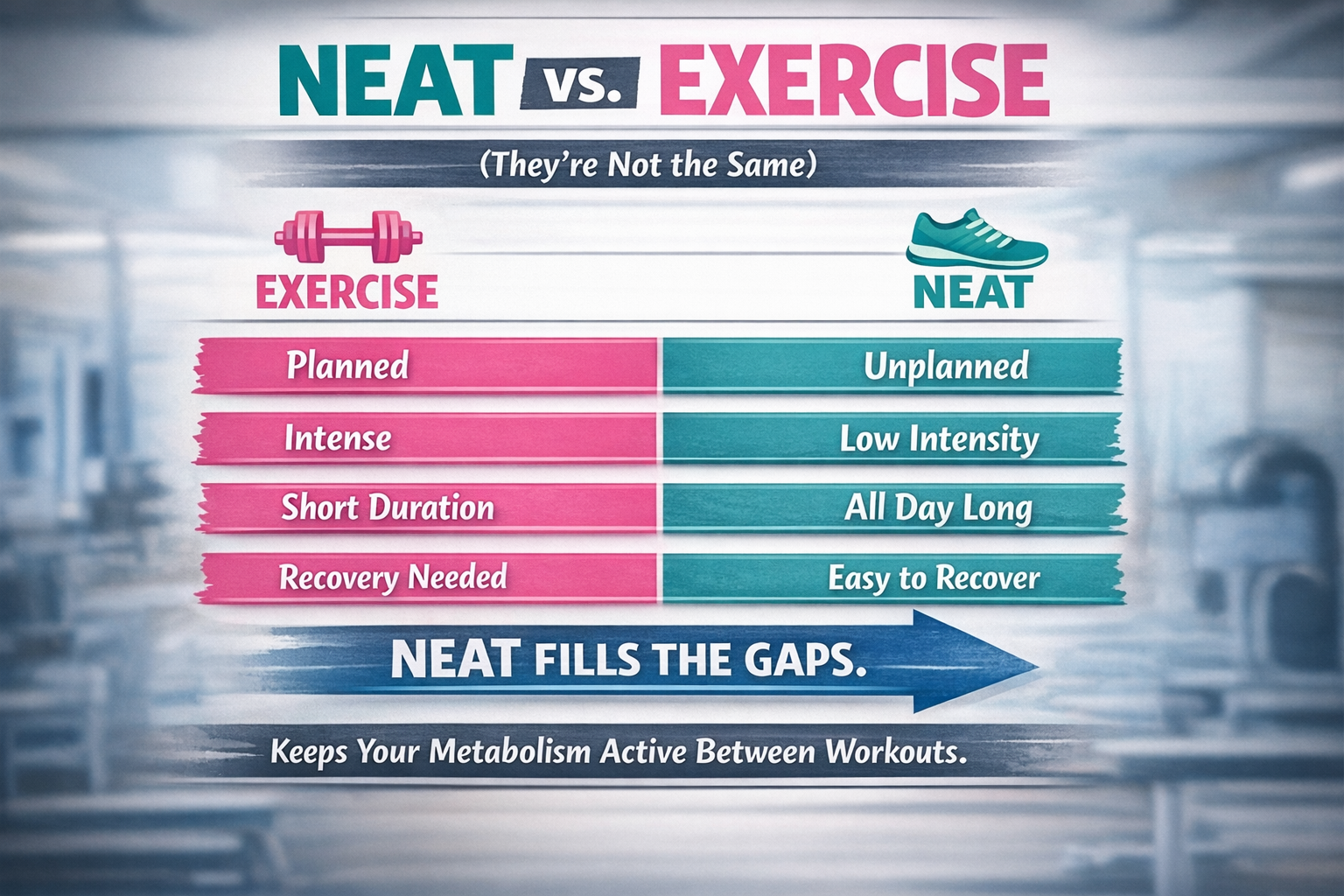
NEAT vs. Exercise (They’re Not the Same)
Your workouts are important.
We still want strength training, conditioning, and structure.
But NEAT is different:
Why This Matters Even More After 40
As we get older:
We tend to sit more
Jobs become less physical
Recovery matters more
So if you’re only relying on workouts…
👉 You’re missing the biggest opportunity.
NEAT helps:
Support metabolism
Improve blood sugar control
Reduce stiffness and joint pain
Increase daily energy
Support fat loss without crushing your body
A Quick Note for Those 70+ (Especially Coming Back After Surgery)
If you’re over 70—especially 75+—and coming back from something like a heart procedure (pacemaker, stent, or valve replacement), or even another major surgery…
This matters even more.
Walking and daily movement are still your foundation.
👉 That’s your NEAT. That’s your baseline.
But here’s the honest truth:
If your stamina feels low…
If you get winded easily…
If your endurance just isn’t where it used to be…
👉 You also need to gently train your heart and lungs again.
NEAT helps you move more.
But cardio (even light, structured cardio) helps you build capacity.
That might look like:
Walking slightly faster for short periods
Adding small hills or incline
Using a bike or machine at a steady pace
Short bouts where your heart rate comes up a bit
Nothing extreme—but enough to say:
👉 “Hey, we’re building this system back up.”
Because right now, for many of you… it’s not just about fat loss.
👉 It’s about getting your stamina back so life feels easier again.
We’ll go deeper on how to safely build that (without overdoing it)…
—but just know:
Movement is step one.
Capacity is step two.
And both matter.
Mobility vs. “Just Stretching”
This is where I want to shift your thinking a bit…
👉 Movement doesn’t always mean workouts.
👉 And it doesn’t always mean stretching either.
Mobility = controlled movement through range
Think:
Getting up and down from the floor
Moving your joints through full range
Light dynamic movement
This type of movement:
Keeps joints healthy
Improves circulation
Reduces aches and stiffness
Supports better workouts
👉 It’s active, not passive.
Simple Ways to Increase Your NEAT (Without Becoming “That Person” 😄)
You don’t need to buy a walking pad…
…but if you do, I won’t judge.
Just know—I would 100% be the person who:
trips on it or worse hurts herself:)
falls off mid-Zoom
or somehow turns it into a squeaky bike situation 😅
So if that’s you too… we’ve got options.
1. Walk more (this is your #1 tool)
10–45 minutes per day
After meals = huge bonus for blood sugar control
👉 Even a 10-minute walk after eating can help regulate blood sugar and improve energy.
2. Take “movement snacks” throughout the day
Set a timer every 60–90 minutes and do:
2–5 minutes of walking
A quick lap around the house
A few mobility movements
Or keep it simple:
👉 Do 20 squats.
3. Use a stand-up desk (or create one)
You don’t need anything fancy:
Kitchen counter
High table
Adjustable desk if you have one
Standing more = more movement, better posture, and less stiffness.
4. Turn daily life into movement
This is where NEAT really adds up:
Gardening 🌱
Vacuuming (yes, it counts)
Laundry (carry those baskets!)
Cleaning the house
Walking the dog 🐶
Playing with kids or grandkids
Running errands instead of sitting all day
👉 Especially important as we age—
this keeps you active without beating up your body.
5. Add “after-meal movement” (game changer)
After you eat:
Take a short walk
Do 20 squats
Light movement around the house
👉 This helps:
Improve blood sugar response
Reduce energy crashes
Support fat loss over time
6. Build your step baseline
Start where you are (no guilt)
Gradually work toward 7,000–10,000+ steps/day
Consistency beats perfection here.
The Big Takeaway
You don’t need to train 6 days a week.
In fact…
👉 Training 2–3 days per week + higher daily movement is the sweet spot for most people.
If fat loss feels stuck…
If energy is low…
If your body feels stiff and achy…
👉 It might not be your workouts.
It might be everything outside of them.
Final Thought
Those “weird” people walking during meetings…
They’re onto something.
Because at the end of the day:
👉 Your body doesn’t just respond to workouts.
👉 It responds to how much you move… all day long.
And sometimes…
The simplest strategy is the one that works best:
👉 Move more. Sit less. Keep it sustainable.
If you want help dialing in your training, nutrition, and daily movement (including your NEAT), check out our Nutrition & Lifestyle Audit:
https://inmotionbend.com/nutrition-Lifestyle-audit

In motion training studio - bend
social media


REQUEST MORE INFORMATION
change you can do & results you will see


LOCATION
inMotion Training Studio
1279 NE 2nd St, Bend, Oregon 97701
