blog | inmotion training studio
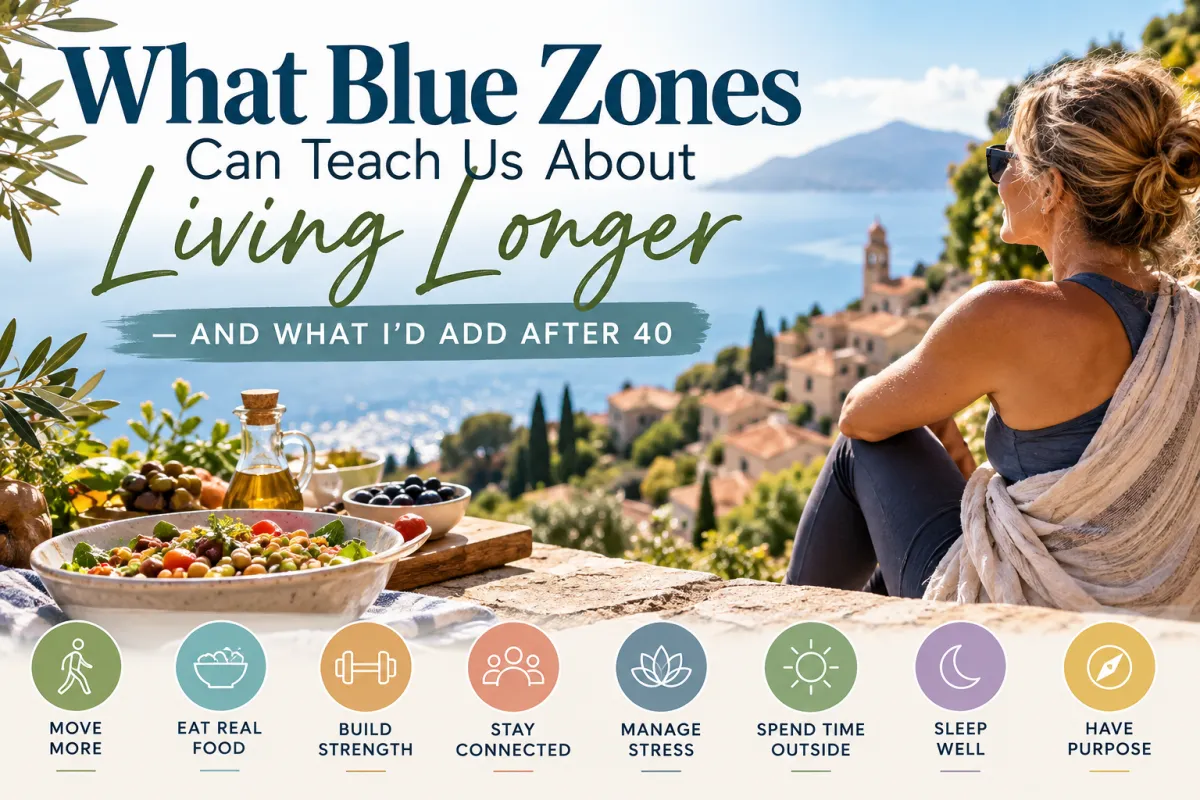
What Blue Zones Can Teach Us About Living Longer—and What I’d Add After 40
What Blue Zones Can Teach Us About Living Longer—and What I’d Add After 40
You’ve probably heard of the Blue Zones—areas of the world where people have historically lived unusually long lives, often remaining active and independent well into their 80s, 90s and beyond.
Places like Okinawa, Japan; Sardinia, Italy; Ikaria, Greece; and the Nicoya Peninsula of Costa Rica have been studied because researchers wanted to know:
What are these people doing differently?
And no, the answer isn’t one magical food, supplement or exercise.
In fact, one of the biggest lessons from these populations is that longevity seems to be influenced by the little things people do day after day for decades.
They Move—a Lot
One of the most interesting things about traditional Blue Zone populations is that most people weren’t going to the gym.
But they also weren’t sitting at a desk all day, driving everywhere, ordering dinner from their phones and then trying to undo 10 hours of sitting with a 30-minute workout.
Movement was simply part of life.
They walked.
They gardened.
They cooked.
They climbed hills and stairs.
They carried groceries and other objects.
They worked around their homes.
They got up and down from the floor.
They continued doing physical tasks as they aged.
That distinction is important.
Exercise is wonderful, but it doesn't replace movement.
Ideally, we want both.
They Eat Mostly Real Food
There isn't one specific “Blue Zone diet.” The foods eaten in Japan look very different from those traditionally eaten in Greece or Costa Rica.
But there are some common themes.
Meals tend to include plenty of:
Vegetables and fruit
Beans, lentils and other legumes
Whole grains and other minimally processed carbohydrates
Nuts and seeds
Herbs and traditional foods
Smaller amounts of highly processed foods and added sugar
Interestingly, legumes—beans, lentils, chickpeas and peas—are one of the foods most consistently associated with these traditional longevity diets.
They're inexpensive, high in fiber, provide plant protein and resistant starch, and are great for the gut microbiome.
You don't have to become vegetarian to learn something from this.
A simple takeaway is:
Eat more plants and more whole foods—not necessarily less food.
They Don't Eat Until They're Stuffed
In Okinawa, there's a traditional phrase called hara hachi bu, which roughly translates to eating until you're about 80% full.
I don't think anyone needs to walk around calculating whether they're exactly 78% or 82% full. 😊
The bigger lesson is that eating slowly enough to recognize fullness matters.
Meals traditionally weren't supersized, eaten in the car or consumed while scrolling through a phone.
Food was eaten more intentionally.
They Have Strong Relationships
This part of longevity doesn't get nearly as much attention as diet and exercise.
Humans need other humans.
Long-lived populations tend to have strong family connections, friendships and community involvement.
They eat together.
They visit.
They help one another.
Older adults remain part of family and community life rather than becoming isolated.
And research outside of the Blue Zones supports this: social connection is strongly associated with health and longevity.
Your workout partner might be doing more for your health than simply making sure you show up!
They Have a Reason to Get Up in the Morning
In Okinawa, it's called ikigai.
In Costa Rica, you may hear plan de vida.
Different words, similar concept:
Purpose.
That doesn't mean you need a giant life mission.
Purpose might be your family, your work, volunteering, caring for animals, gardening, traveling, coaching, creating something, learning something new or simply being involved in your community.
Retirement from a career doesn't have to mean retirement from life.
They Have Ways to Downshift
Blue Zone communities aren't magically stress-free.
The difference may be that their lifestyles traditionally include regular ways of coming back down from stress.
That might be:
Prayer.
A nap.
Walking.
Time outside.
Talking with friends.
Eating dinner together.
Having a glass of wine with a meal in cultures where that is traditional.
Simply slowing down.
We can't eliminate stress, but we can get better at giving our nervous system opportunities to recover from it.
But There's One Thing I'd Add After 40
This is where I think we need to take what we've learned from traditional longevity populations and combine it with what we now know about aging.
Strength training.
Our modern lives are very different.
Most of us aren't walking miles over hills, carrying heavy objects, farming, gardening for hours or doing physical labor every day.
And beginning in midlife, maintaining muscle becomes increasingly important.
For women, this becomes especially important during perimenopause and after menopause, when changes in hormones can accelerate losses in muscle and bone if we aren't actively doing something to preserve them.
Muscle isn't just about looking toned.
Muscle is longevity tissue.
It helps us:
Maintain our metabolism
Improve insulin sensitivity
Support our joints
Protect our bones
Maintain balance
Reduce fall risk
Get off the floor
Carry groceries and luggage
Hike, ski, golf or play pickleball
Stay independent as we age
Walking is fantastic.
Yoga is fantastic.
Mobility work is fantastic.
But none of them completely replace progressive resistance training.
Your body needs a reason to keep muscle.
That means gradually asking it to do more—more resistance, more repetitions, better control or more challenging movements—as your body adapts.
That's progressive overload, and it's one of the foundations of how we train at inMotion.
And Don't Forget Protein
This is another area where I would modify the traditional Blue Zone conversation for adults over 40.
As we age, our bodies don't respond to protein quite as efficiently as they did when we were younger.
That makes getting adequate protein throughout the day, along with resistance training, especially important for maintaining lean muscle.
That doesn't mean abandoning plants or eating enormous steaks three times a day.
It means building meals around quality protein while still eating plenty of vegetables, fruit, fiber, healthy fats and minimally processed foods.
The inMotion Longevity Formula
If I were going to take the best lessons from Blue Zones and adapt them for the way we live today, it would look something like this:
Lift something heavy.
Walk and move throughout your day.
Eat enough protein.
Eat lots of colorful plants and fiber.
Include beans and legumes.
Sleep.
Manage stress.
Spend time outside.
Maintain your mobility.
Stay connected to people.
Keep doing things that give your life purpose.
And maybe most importantly:
Don't wait until you're 70 to start thinking about how you want to feel at 70.
The goal isn't simply to add years to your life.
It's to build a body that allows you to LIVE those years.
That's what we mean when we say:
Live Life inMotion.

In motion training studio - bend
social media


REQUEST MORE INFORMATION
change you can do & results you will see


LOCATION
inMotion Training Studio
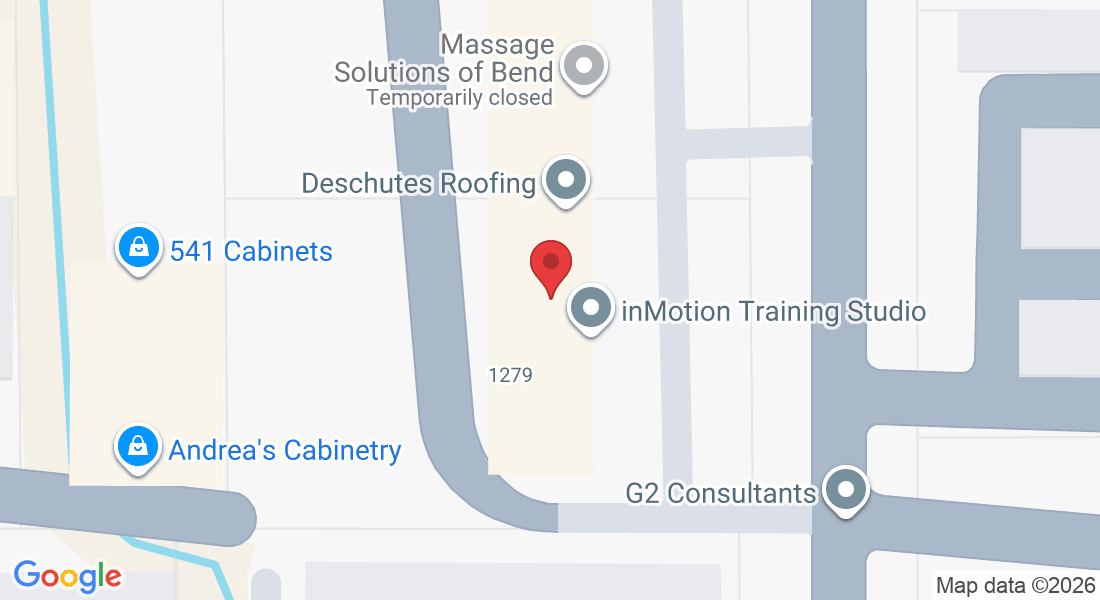
1279 NE 2nd St, Bend, Oregon 97701