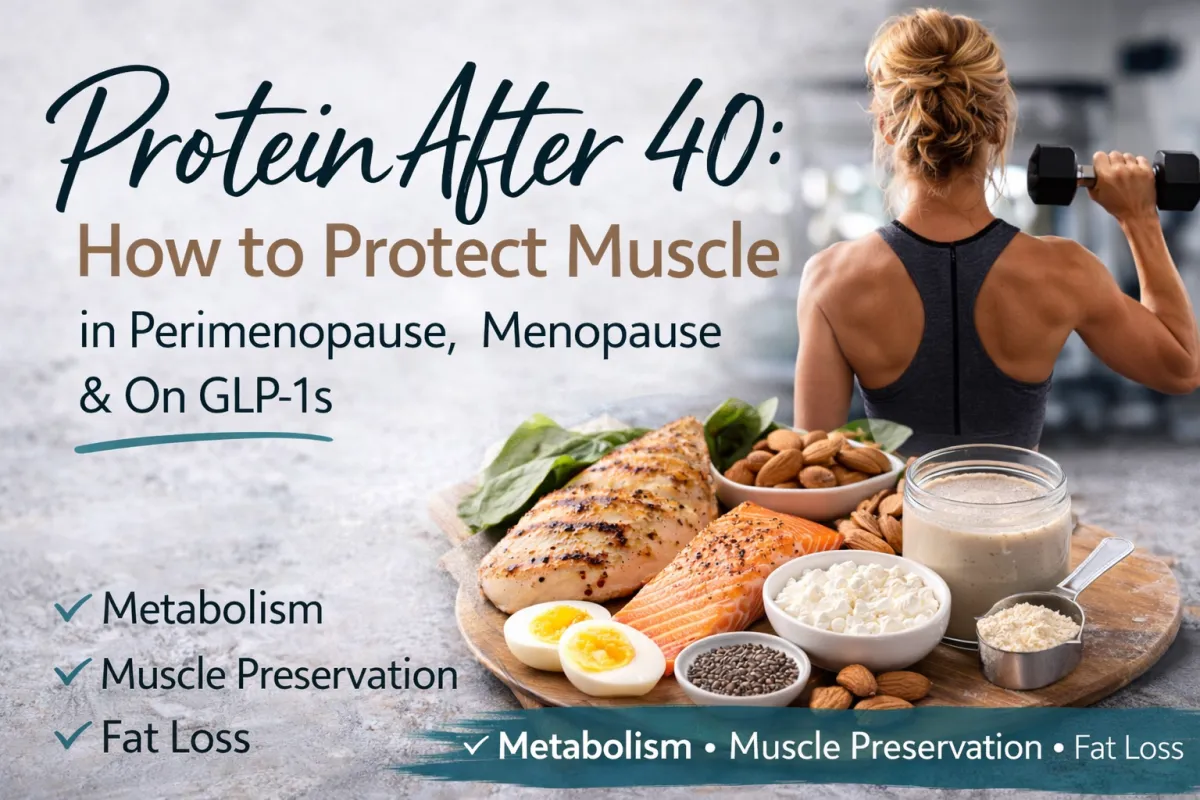
Protein After 40: How to Protect Muscle in Perimenopause, Menopause & On GLP-1s
Protein After 40: How to Protect Muscle in Perimenopause, Menopause & On GLP-1s
This is one of the biggest things I have to coach most of my clients on.
Not workouts.
Not cardio.
Not even calories.
Protein.
“How much protein should I be eating?”
“Am I getting enough?”
“I keep hearing I need more protein… but how?”
And lately, it’s even more specific:
“I’m in perimenopause.”
“I’m postmenopausal.”
“I’m on a GLP-1 and I’m not even hungry.”
You hear it everywhere:
Eat more protein.
Protein is critical.
Okay.
But how… if you’re not hungry?
If you feel full fast?
If you’ve never eaten that much protein before?
This is exactly where most people get stuck.
Because I coach and train a lot of women in perimenopause and menopause — and I work with many clients on GLP-1s — and this is one of the biggest missing pieces I see.
They’re under-eating protein.
They don’t realize how much they actually need.
Or they’re trying to increase it in a way that feels overwhelming and unsustainable.
So let’s break this down in a way that actually makes sense — and more importantly — feels doable.
Why Protein Becomes More Important After 40
In perimenopause and menopause, estrogen declines.
And that affects more than just your cycle.
Lower estrogen impacts:
Muscle retention
Insulin sensitivity
Recovery
Fat storage patterns
Bone density
At the same time, muscle loss naturally accelerates with age.
That muscle is what protects:
Your metabolism
Your blood sugar
Your joints
Your balance
Your independence
So when people say “eat more protein,” what they’re really saying is:
Protect your muscle.
Because if muscle drops, metabolism drops with it.
And once that happens, everything feels harder.
Fat loss.
Energy.
Strength.
Blood sugar.
Confidence.
Protein becomes less about aesthetics and more about longevity.
And Yes — Men Need to Pay Attention Too
Men aren’t immune.
Testosterone gradually declines after 40, which impacts:
Muscle maintenance
Recovery
Body composition
Men often eat more protein naturally, but when calories drop (especially if dieting or using GLP-1 medications), protein can fall too low without realizing it.
After 40, muscle preservation should be intentional — for everyone.
The GLP-1 Conversation (The Part No One Explains)
GLP-1 medications reduce appetite.
That’s the goal.
But here’s the problem I see:
When appetite drops, total calories drop.
And when calories drop unintentionally…
Protein drops too.
If protein intake is too low while on a GLP-1:
Muscle loss increases
Metabolism slows
Fat loss includes lean mass
“Ozempic face” becomes more likely
Coming off the medication becomes harder
GLP-1 + low protein + no strength training
= muscle loss.
GLP-1 + adequate protein + strength training
= fat loss while preserving muscle.
Completely different outcome.
“But I’m Not Hungry.”
This is the most common thing I hear.
“I know I need protein… I just don’t feel hungry.”
So here’s what we do instead of forcing huge meals:
Prioritize protein first at each meal
Use smaller, higher-density protein sources
Front-load protein earlier in the day
Use strategic protein supplementation
Eat on structure, not just hunger cues
On GLP-1s especially, waiting until you’re hungry doesn’t work.
Because sometimes… you won’t feel hungry.
That’s where structure matters.
I have clients set an alarm or timer so they eat...and help structure their meals accordingly learning our complete in 3 structure.
Practical Shifts That Work
Instead of:
A large salad with 12g protein.
Try:
4 oz chicken (28g) + vegetables.
Instead of:
3 eggs (18g).
Try:
3 eggs + egg whites (30g).
Instead of:
Skipping breakfast.
Try:
Greek yogurt + protein powder (30g).
Instead of:
Trying to jump from 50g to 130g overnight.
Increase by 3–5g per day and build gradually.
Protein doesn’t have to feel overwhelming.
It just has to be intentional.
The Bigger Picture
Protein after 40 isn’t about chasing a number.
It’s about:
Preserving lean mass
Protecting metabolism
Supporting blood sugar
Preventing frailty
Supporting strength training
Making fat loss more sustainable
Especially in:
Perimenopause
Menopause
Post-menopause
GLP-1 use
This is foundational.
Not Sure Where You’re At? Let’s Look at It.
Most people think they’re eating enough protein.
Then we track for 3–5 days… and they’re at 45–60g.
Or they’re under-eating overall.
Or fats are too high and protein is too low.
Or blood sugar is unstable.
Or hydration and minerals are off.
That’s exactly why I created the Nutrition Audit.
We don’t guess.
We look at:
Your actual intake
Protein targets based on your bodyweight and activity
Meal timing
GLP-1 considerations
Blood sugar patterns
Training support
Recovery and hydration
Then I give you:
Clear feedback
Personalized protein goals
Simple meal structure
Practical adjustments
A realistic plan that fits your life
Because adding a GLP-1, or trying to lose fat, without dialing in your foundation first?
That’s backwards.
If you want clarity on exactly how much protein YOU need — and how to implement it without feeling overwhelmed — apply for a Nutrition Audit.
Let’s build it correctly from the ground up.
Muscle protected.
Metabolism supported.
Plan personalized. 💪