Strength Training After 40: Why Being Active Isn't Enough
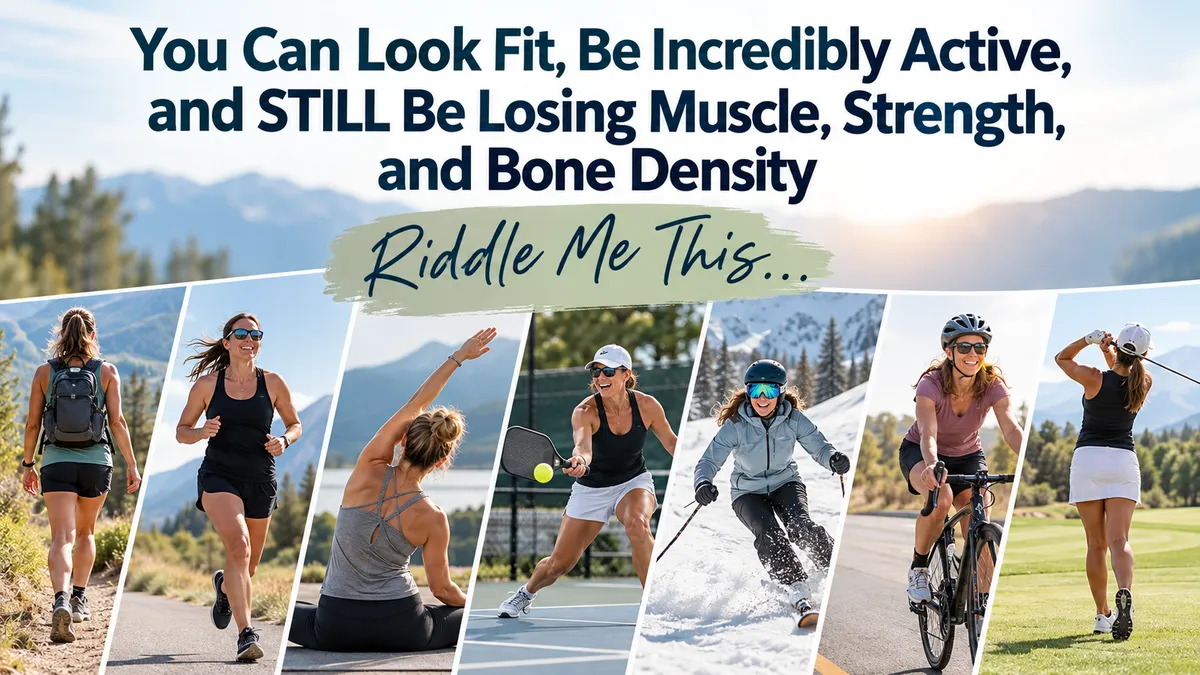
You Can Look Fit, Be Incredibly Active, and STILL Be Losing Muscle, Strength, and Bone Density
Why walking, running, skiing, biking, pickleball, yoga, and golf are great for your health—but may not be enough to maintain strength as you age.
Riddle Me This…
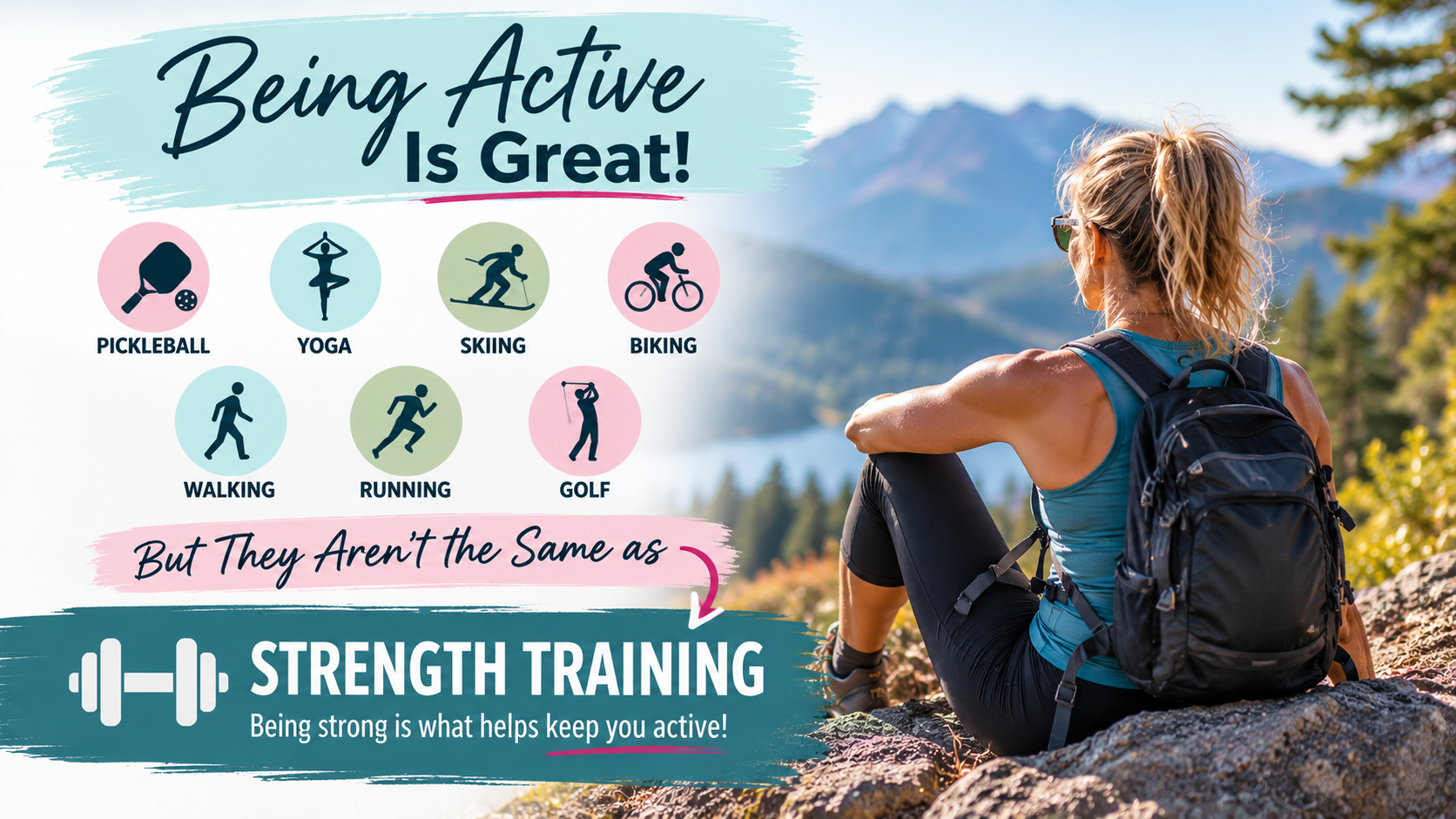
What do pickleball, yoga, skiing, biking, walking, running, and golf all have in common?
They aren't necessarily strength training!
Before anyone gets upset, I LOVE that you're moving. All of these activities have tremendous benefits, and I want people to keep doing them for as long as possible.
Walking supports cardiovascular health. Running builds endurance. Yoga improves flexibility, mobility, and body awareness. Pickleball challenges coordination and reaction time. Skiing develops balance and lower-body endurance. Golf requires rotation, stability, and coordination.
They're all valuable.
But here's something I wish more people understood:
You can look fit, be incredibly active, and STILL be losing muscle, strength, and bone density.
And for adults over 40, this is a much bigger issue than most people realize.
Looking Fit Doesn't Always Mean You're Strong
Recently, I met with a 40-year-old runner who had already been diagnosed with both sarcopenia and osteopenia.
She's lean, athletic, active, and looks like someone most people would consider to be in excellent shape.
And in many ways, she is.
But despite her appearance and active lifestyle, she's dealing with significant concerns about her muscle and bone health.
She's only 40!
Sarcopenia is a condition characterized by reduced muscle strength, with low muscle quantity or quality helping confirm the diagnosis. It's most commonly associated with older adults, but clinically significant muscle deficits can occur earlier in life.
Osteopenia refers to bone mineral density that is below the normal range but not low enough to meet the definition of osteoporosis. It's often identified through a bone density scan, and it can be influenced by age, hormones, genetics, nutrition, medications, and physical activity.
These are conditions many people associate with adults in their 60s, 70s, or 80s.
Not a 40-year-old runner.
And that's exactly why this conversation matters.
Looking healthy doesn't always tell us what's happening underneath.
You can have excellent cardiovascular endurance and inadequate muscle strength.
You can be flexible but lack stability.
You can have a low body weight but insufficient muscle mass.
You can exercise nearly every day and still not provide your bones and muscles with the stimulus they need to remain strong.
Being active and being strong are not automatically the same thing.
The Difference Between Physical Activity and Strength Training
One of the biggest misconceptions I see is the assumption that any form of exercise provides the same benefits.
It doesn't.
Different activities create different adaptations in the body.
Your body responds to the demands you consistently place on it.
Walking improves your ability to walk. Running improves your ability to run. Cycling develops cardiovascular endurance and muscular endurance in the muscles used for cycling.
These are important adaptations, but they don't necessarily translate into greater whole-body strength, muscle mass, or bone density.
Why your muscles need resistance
Muscle tissue adapts when it's challenged with sufficient mechanical tension.
That can come from dumbbells, barbells, kettlebells, resistance machines, cables, resistance bands, or appropriately challenging bodyweight exercises.
The key isn't the equipment.
It's the demand placed on the muscle.
Over time, that demand needs to progress as your body becomes stronger.
This is called progressive overload.
It doesn't mean constantly lifting heavier weights or pushing yourself to exhaustion. It means gradually increasing the challenge through weight, repetitions, range of motion, exercise difficulty, or training volume.
Without an adequate training stimulus, the body has less reason to maintain or build additional muscle and strength.
But aren't skiing, yoga, and pickleball strengthening?
They absolutely can provide some strengthening benefits.
A challenging yoga practice can build strength and muscular endurance. Skiing places substantial demands on the legs. Pickleball requires repeated acceleration, deceleration, and directional changes.
For someone who is relatively inactive, these activities may provide a meaningful muscular challenge.
But the question is whether they provide enough resistance, across enough muscle groups, with enough progression, to maintain or improve strength over time.
For many adults, particularly those who have been doing the same activities for years, the answer is not consistently.
An activity can be physically demanding without being a complete strength-training program.
That's an important distinction.
Muscle Loss Doesn't Suddenly Begin at 65
Many people don't start thinking about muscle loss until they're much older.
But changes in muscle mass, strength, and power can begin decades earlier.
The rate varies considerably depending on physical activity, nutrition, hormonal changes, health conditions, and individual differences.
It's also important to understand that muscle mass and muscle strength are not identical.
Someone can maintain a relatively similar amount of muscle while gradually losing strength because of changes in muscle quality, neuromuscular function, or physical activity.
And muscle power—the ability to produce force quickly—often declines faster than maximal strength.
That's why someone might still be able to lift something heavy but struggle with quick reactions, getting up from a low position, or recovering from a stumble.
Why this matters in everyday life
Muscle isn't just about how your arms or legs look.
It's what allows you to:
Get up off the floor without assistance.
Carry groceries, luggage, and grandchildren.
Climb stairs comfortably.
Maintain balance on uneven ground.
Recover when you trip or lose your footing.
Continue hiking, skiing, golfing, biking, and traveling.
Maintain independence as you get older.
The goal isn't simply to avoid losing muscle.
It's to build enough strength and physical capacity now that you have a greater reserve for the decades ahead.
Why Strength Training Becomes Especially Important During Perimenopause and Menopause
This is an area I wish more women understood before they reached menopause.
During perimenopause, estrogen levels fluctuate, and eventually decline as women transition into menopause.
Estrogen influences far more than reproductive health. It also plays a role in bone remodeling, muscle function, connective tissue health, and metabolic regulation.
The menopause transition can coincide with changes in body composition, including increased abdominal fat and changes in lean mass.
Bone loss can also accelerate during the years surrounding the final menstrual period.
And while hormonal changes are important, they're not the only factor. Sleep, protein intake, physical activity, stress, genetics, and overall health all contribute.
Bone density deserves more attention
Bones are living tissue.
They continually undergo a process of breakdown and rebuilding, known as bone remodeling.
When bone breakdown exceeds bone formation over time, bone density can decline.
Resistance training and appropriately prescribed impact exercise can help provide the mechanical loading that supports bone health.
But not all exercises load the skeleton in the same way.
Walking is beneficial for general health, but it may not provide enough stimulus to meaningfully increase bone density in someone who already walks regularly.
Cycling and swimming offer excellent cardiovascular benefits but provide relatively little weight-bearing skeletal loading.
Strength training can complement those activities by loading muscles and bones in ways they may not otherwise experience.
For people with osteopenia or osteoporosis, exercise selection matters. Training should be individualized based on fracture risk, medical history, and movement ability.
The goal isn't to lift recklessly.
It's to apply the right kind of challenge safely and consistently.
Muscle Is One of Your Most Important Metabolic Assets
We often think about muscle primarily in terms of movement, appearance, and strength.
But skeletal muscle is also a major metabolic organ.
It's one of the body's primary sites for glucose uptake and storage.
After you eat carbohydrates, glucose enters your bloodstream. Skeletal muscle helps remove and use that glucose, particularly in response to insulin and during or after exercise.
Regular resistance training can improve insulin sensitivity and glucose regulation, even when the scale doesn't change significantly.
This is one reason body weight alone doesn't tell the whole story.
Two people can weigh the same amount but have very different proportions of muscle and body fat, different levels of strength, and different metabolic risk profiles.
What about people who are naturally lean?
Being lean doesn't automatically mean someone has adequate muscle or optimal metabolic health.
It's possible to have a relatively low body weight while carrying insufficient muscle for your needs.
It's also possible to have a higher body weight and be metabolically healthy, physically strong, and active.
This is why I prefer looking beyond weight and appearance.
Strength, movement quality, blood pressure, glucose regulation, body composition, energy, and functional ability often tell us much more.
Your muscle is an investment in your metabolic health, not just your appearance.
Stronger Muscles Help Support Your Joints
This one is personal for me.
I've been an athlete my entire life, and I've also had my share of injuries—including two ACL surgeries and three meniscus surgeries.
I love playing sand volleyball.
But I know I can't just show up, jump, dive, land, change directions, and expect my knees and the rest of my body to handle everything without preparation.
I strength train because I want to KEEP playing.
Does that guarantee I'll never get injured again?
Of course not.
Strength training doesn't eliminate injury risk, and not every injury can be prevented.
But stronger muscles, better movement control, and adequate physical conditioning can improve the body's capacity to tolerate the demands of sport and everyday activity.
Why this matters for aging joints
As we age, many of us deal with some combination of:
Previous injuries or surgeries.
Arthritis or joint discomfort.
Tendon irritation.
Reduced mobility.
Muscle imbalances or weakness.
Decreased confidence in certain movements.
Avoiding all challenging movement isn't necessarily the solution.
In many cases, appropriately modified strength training is an important part of maintaining function.
That might mean changing the exercise, reducing the range of motion, adjusting the load, slowing the movement, or building strength in a different position.
Someone with knee pain may need a different approach to squatting or lunging.
Someone with shoulder limitations may need modified pressing exercises.
Someone returning from surgery may need a carefully progressed program that complements their physical therapy.
The goal is to work with the body you have, not force it into a workout that doesn't fit.
You Don't Have to Be an Athlete to Train Like Your Body Matters
Think about it.
I don't know many serious athletes who don't incorporate strength training into their preparation.
Runners train their legs, hips, and trunk to support running mechanics and physical capacity.
Golfers develop rotational strength, balance, and stability.
Skiers build lower-body strength to tolerate the demands of the mountain.
Volleyball players train to jump, land, accelerate, and change direction.
So why do we sometimes assume that, as we get older, we can continue doing all these activities without specifically maintaining our strength?
And before you say, "Well, I'm not an athlete!"
I'd argue that we're all athletes in our own way.
Maybe your sport is pickleball, skiing, hiking, biking, golf, or running.
Maybe it's gardening, traveling, playing with your grandkids, or carrying everything in from the car in one trip.
Your body still needs strength, mobility, balance, coordination, and the ability to handle whatever life throws at it.
You don't have to train like a professional athlete.
You need to train for the life you want to keep living.
11 Reasons Strength Training Matters After 40
Strength training is about much more than bigger muscles.
Here are some of the most important benefits.
💪🏼 1. Preserve Muscle Mass and Reduce the Risk of Sarcopenia
Progressive resistance training helps maintain and build skeletal muscle while improving strength and physical function.
These adaptations can help counter age-related declines in muscular capacity.
Importantly, improvements in strength can occur even when changes in visible muscle size are modest.
🦴 2. Support Bone Density and Skeletal Strength
Resistance training places mechanical demands on bones, which can support bone health.
This is especially relevant for women during and after menopause, when bone loss may accelerate.
Exercise is one part of bone health, alongside adequate nutrition, hormonal and medical factors, and appropriate screening.
🔥 3. Improve Insulin Sensitivity and Metabolic Health
Skeletal muscle is essential for glucose metabolism.
Resistance training can improve insulin sensitivity and glucose regulation, supporting long-term metabolic health.
These benefits can occur independently of major changes in body weight.
🦵 4. Improve Joint Support and Physical Resilience
Strong muscles help stabilize joints and support efficient movement.
Appropriately progressed strength training can improve physical capacity and may help manage certain musculoskeletal conditions.
The right program depends on the individual, particularly when pain or previous injuries are involved.
⚖️ 5. Improve Balance and Reduce Fall Risk
Strength training, particularly when combined with balance and functional exercises, can improve stability and reduce fall risk in older adults.
Lower-body strength is especially important for stepping, climbing, and recovering balance.
🚶♀️ 6. Maintain Mobility and Independence
Strength and mobility work together.
Having the flexibility to reach a position is helpful, but having the strength to control that position is equally important.
Everyday activities like getting off the floor, standing from a chair, and carrying groceries require muscular strength.
⚡ 7. Preserve Power and Reaction Ability
Muscle power is the ability to generate force quickly.
It matters when you need to step over an obstacle, climb a stair, move quickly, or recover from a stumble.
Power training can be adapted for different abilities and doesn't necessarily require jumping or high-impact exercise.
🧠 8. Support Brain Health and Cognitive Function
Research suggests resistance training may benefit certain aspects of cognitive function, including executive function, in some populations.
It's not a guarantee against cognitive decline, but it can be a valuable part of an overall brain-healthy lifestyle.
💟 9. Support Cardiovascular Health
Resistance training can contribute to improvements in blood pressure and other cardiovascular risk factors.
It complements aerobic exercise rather than replacing it.
A well-rounded program benefits from both.
💤 10. Improve Sleep, Mood, and Quality of Life
Regular resistance training can support mood, sleep quality, physical confidence, and overall well-being.
The psychological benefit of feeling physically capable is also meaningful.
There's something powerful about realizing you can do something that used to feel difficult.
⛳ ⛷️11. Improve Performance in the Activities You Love
Whether you ski, golf, run, hike, cycle, play pickleball, or simply enjoy staying active, strength training helps build the physical capacity to support those activities.
And perhaps most importantly, it helps you prepare for the activities you want to continue enjoying years from now.
How Much Strength Training Do You Actually Need After 40?
For most adults, a good starting point is at least two days of muscle-strengthening activity per week, covering the major muscle groups.
That's consistent with general physical activity guidelines.
For many people, training two or three days per week provides an effective balance of stimulus and recovery.
More isn't automatically better.
Consistency, exercise selection, appropriate intensity, progression, and recovery matter far more than simply accumulating workouts.
What should a strength-training program include?
A balanced program generally incorporates several fundamental movement patterns:
Squatting: Strengthening the muscles used to sit down, stand up, climb stairs, and lift.
Hinging: Building strength through the hips and posterior chain, important for lifting and bending.
Pushing: Developing upper-body strength for everyday pushing and pressing tasks.
Pulling: Strengthening the back, shoulders, and arms.
Single-leg training: Improving lower-body strength, balance, and control.
Core and trunk stability: Building the ability to control and transfer force during movement.
Carrying: Developing practical strength, grip, and whole-body stability.
Depending on the individual, a program may also incorporate balance, mobility, power, and conditioning.
You don't have to do every exercise in every workout.
And not everyone should perform the same version of an exercise.
Do you have to lift heavy?
You need enough resistance to challenge your muscles.
For some people, that might initially mean bodyweight exercises, resistance bands, or lighter dumbbells.
For others, it means progressively heavier resistance.
Both lighter and heavier loads can help build muscle when the sets are sufficiently challenging, although heavier loads are generally more effective for improving maximal strength.
The appropriate starting point depends on your experience, health, movement ability, and goals.
The important thing is that your training progresses as you adapt.
Why Doing the Same Workout Forever May Stop Producing Results
Your body is remarkably good at adapting.
That's one of the benefits of exercise.
But it also means that an exercise that was challenging six months ago may no longer provide the same stimulus.
If you're always using the same weights, performing the same repetitions, and never increasing the difficulty, you may eventually reach a plateau.
This doesn't mean every workout needs to be harder than the last.
Recovery, stress, sleep, illness, injuries, and hormonal changes all influence training readiness.
Progressive overload is about the bigger picture.
Over weeks and months, the training stimulus should evolve to match your growing capacity.
And progression isn't limited to adding weight.
It can also mean improving technique, increasing controlled range of motion, adding repetitions, or performing an exercise with better stability.
For adults over 40, especially those managing injuries or returning to exercise, intelligent progression is often more valuable than aggressive progression.
Recovery Is Part of Getting Stronger
Strength training creates a stimulus.
Recovery is when the body adapts to that stimulus.
As we get older, it's worth paying closer attention to sleep, nutrition, training frequency, and overall stress.
That doesn't mean people over 40 are fragile or need to avoid hard training.
It means training should be challenging enough to create results and sustainable enough to repeat consistently.
Protein matters, too
Strength training and protein intake work together to support muscle maintenance and growth.
Protein provides the amino acids needed for muscle repair and adaptation.
Individual protein needs vary based on body size, age, activity level, health conditions, and training goals.
For many healthy, active adults, especially those focused on maintaining or building muscle, daily protein intakes around 1.2–1.6 grams per kilogram of body weight can be a useful starting range, with some people benefiting from more.
Protein alone won't replace resistance training.
And resistance training without adequate nutrition may limit the adaptations you're trying to achieve.
The two work best together.
Strength Training Isn't Just for People Who Want to Change Their Bodies
This is probably the biggest mindset shift I'd love to see.
We still tend to associate lifting weights with changing how our bodies look.
Losing fat.
Building bigger muscles.
Getting toned.
And while those may be perfectly reasonable goals, strength training offers something much more important.
Physical capability.
Being able to travel without worrying about carrying your luggage.
Getting down on the floor and back up again.
Continuing to ski or hike.
Feeling confident on uneven ground.
Maintaining your balance.
Having enough strength to enjoy your life instead of gradually limiting what you do.
Those are the things that matter more and more as the years go by.
And they don't happen by accident.
We're Not Just Training for Today. We're Training for the Next 20, 30, or 40 Years.
I don't want to just live longer.
I want to keep doing the things I love.
I want to play volleyball, ski, hike, travel, carry my own luggage, and get up off the floor without having to think twice about it.
I know my body has limitations. I've had enough knee surgeries to understand that.
But I also know how much strength training has helped me continue doing the things I enjoy.
That doesn't mean I'll never have another injury or need to change how I train.
It means I'm doing what I can to maintain the strength, mobility, and physical capacity that make those activities possible.
And that's what I want people to understand about healthy aging.
It's not just about lifespan—how many years we live.
It's about healthspan—how many of those years we can live with strength, function, independence, and the ability to participate in the things we love.
Walking, biking, skiing, running, yoga, and pickleball can absolutely be part of that picture.
They're valuable pieces of a healthy, active lifestyle.
But they don't automatically replace a progressive strength-training program.
Being active is great. Being strong is what helps keep you active.
And that's why strength training matters at 40, 50, 60, 70, and beyond.
Live Life inMotion.
Research and Further Reading
U.S. Department of Health and Human Services. Physical Activity Guidelines for Americans, 2nd edition. Recommendations for aerobic and muscle-strengthening activity.
Cruz-Jentoft AJ et al. (2019). Sarcopenia: Revised European Consensus on Definition and Diagnosis. Age and Ageing.
Fragala MS et al. (2019). Resistance Training for Older Adults: Position Statement From the National Strength and Conditioning Association. Journal of Strength and Conditioning Research.
Watson SL et al. (2018). High-Intensity Resistance and Impact Training Improves Bone Mineral Density and Physical Function in Postmenopausal Women With Osteopenia and Osteoporosis: The LIFTMOR Randomized Controlled Trial. Journal of Bone and Mineral Research.
Morton RW et al. (2018). A Systematic Review, Meta-analysis and Meta-regression of the Effect of Protein Supplementation on Resistance Training-Induced Gains in Muscle Mass and Strength in Healthy Adults. British Journal of Sports Medicine.


